Tell us what products you need, your target market, estimated quantities, required specifications, packaging requirements, and any documentation your company requires.
Still Looking for a Reliable Disposable PPE Supplier?
Tell us what disposable PPE you need, including specifications, quantity, target market, and OEM needs. We’ll review it and recommend suitable options.
Contact Our Team
Tell us what products you need, your target market, estimated quantities, required specifications, packaging requirements, and any documentation your company requires.
Have a PPE Product Requirement ? Talk to Our Specialists
Get practical guidance on disposable PPE specifications, materials, sizing, packaging, private labeling, documentation, and bulk production requirements.
A CE logo and the words “EN 149” on a carton do not prove that an FFP2 respirator is legal to sell in the EU or that it will filter as claimed. For importers, distributors and procurement teams, the practical question is which documents and markings can be checked independently before a purchase order is placed. FFP2 respirators are regulated as personal protective equipment, and the evidence behind the marking is more specific than a single certificate PDF. This article explains what a valid CE marking on an FFP2 respirator should look like, what EN 149 does and does not demonstrate, how to cross-check a supplier’s paperwork step by step, and which claims should trigger further questions.
What Does a Valid CE Marking on an FFP2 Respirator Mean?
A valid CE marking on an FFP2 respirator means the manufacturer declares conformity with Regulation (EU) 2016/425 on personal protective equipment, and an EU notified body has been involved in the conformity assessment. Respirators that protect against harmful aerosols fall into PPE Category III, the highest-risk category. For this category, the model must pass EU type-examination (Module B) at a notified body. Ongoing production must be controlled under either Module C2 (supervised product checks at random intervals) or Module D (quality assurance of the production process).
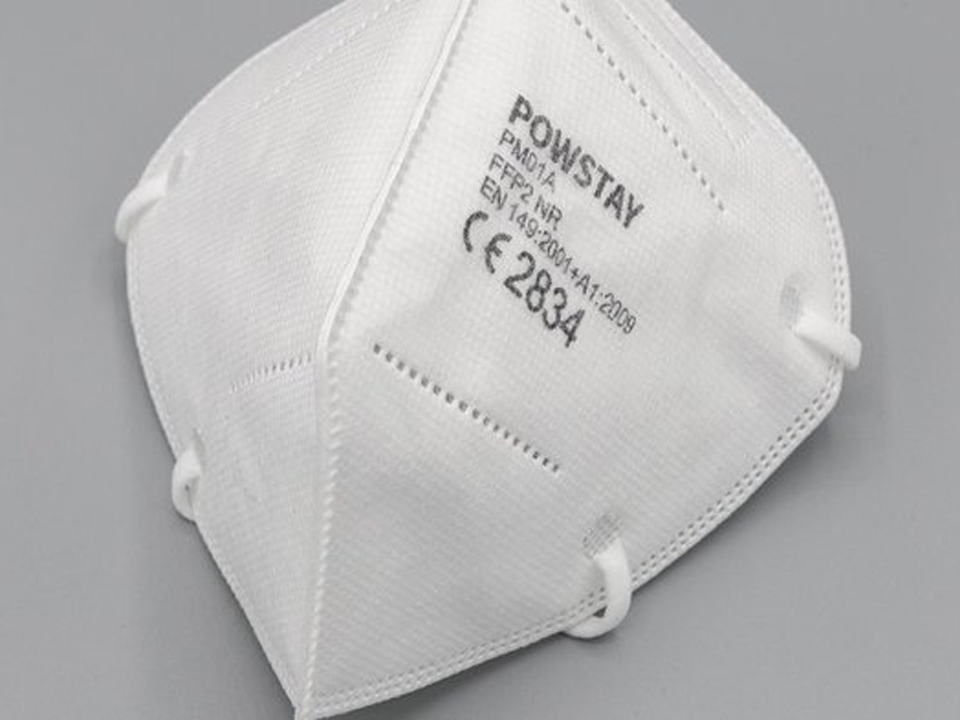
In practice, a compliant FFP2 respirator should show a CE marking followed by a four-digit notified body number. That number identifies the body involved in the production-control stage. It is not always the same body that issued the original type-examination certificate, so do not treat a mismatch as proof of fraud without asking.
The table below separates the elements a buyer should expect to see and what each one can and cannot tell you.
Element
Where to find it
What it supports
What it does not prove
CE marking + 4-digit notified body number
On the respirator and packaging
The manufacturer claims Category III conformity with notified body involvement in production control
That the number is genuine, in scope, or linked to this specific model
Standard, class and type (for example, EN 149:2001+A1:2009 FFP2 NR D)
On the respirator and packaging
The model was designed and tested to the claimed class
That the lot you receive matches the tested sample
EU type-examination certificate
Supplier document, issued by a notified body
A named model, with defined variants, passed examination
That production continues to match, or that the certificate is still valid
EU declaration of conformity (DoC)
With the product or via a URL in the instructions
The manufacturer takes responsibility and identifies the model, legislation and standards
Independent testing of any kind
Manufacturer or importer name and address, batch or type identification
On the product or packaging
Traceability to a responsible economic operator
Quality of the product
Under the regulation, manufacturers and importers also have to keep the declaration of conformity and technical documentation available for authorities for a defined period after the product is placed on the market. Confirm the exact obligations with your compliance adviser or the primary legal text, because importer duties depend on your role in the supply chain.
What EN 149 Covers, and What “Tested to EN 149” Does Not Prove
EN 149:2001+A1:2009 is the European standard for filtering half masks used as respiratory protection against particles. It sets performance classes (FFP1, FFP2 and FFP3). An FFP2 respirator is expected to meet a minimum filtration efficiency of 94% and a stricter total inward leakage limit than FFP1. The standard tests more than the filter media. It also covers leakage to the face, breathing resistance, strap and component strength, flammability, CO₂ content of inhaled air, and marking and information supplied.
Three designations appear in the product marking:
NR means non-reusable, intended for a single shift.
R means reusable, intended for more than one shift.
D means the respirator passed the dolomite dust clogging test, which relates to breathing resistance after dust loading. Check the standard itself for which classes require it.
A typical FFP2 designation therefore reads FFP2 NR D. If a product shows “FFP2” but no standard reference, no NR/R classification or no manufacturer identification, the marking is incomplete, whatever the quality of the filter.
Why a test report is not the same as a CE certificate
Many buyers assume that a laboratory report showing “pass” under EN 149 is enough. It is evidence, but it is not conformity assessment. A lab report shows that the tested samples met the requirements at the test date. The CE route for Category III also requires a notified body examination, a technical file, a declaration of conformity and continuing production control. A pass report from a non-notified lab, or from a test of a different construction, cannot replace the certificate. The reverse also applies. A genuine certificate does not guarantee that every shipped lot performs the same, which is why batch-level controls and incoming checks still matter.
FFP2, KN95 and N95 are not interchangeable labels
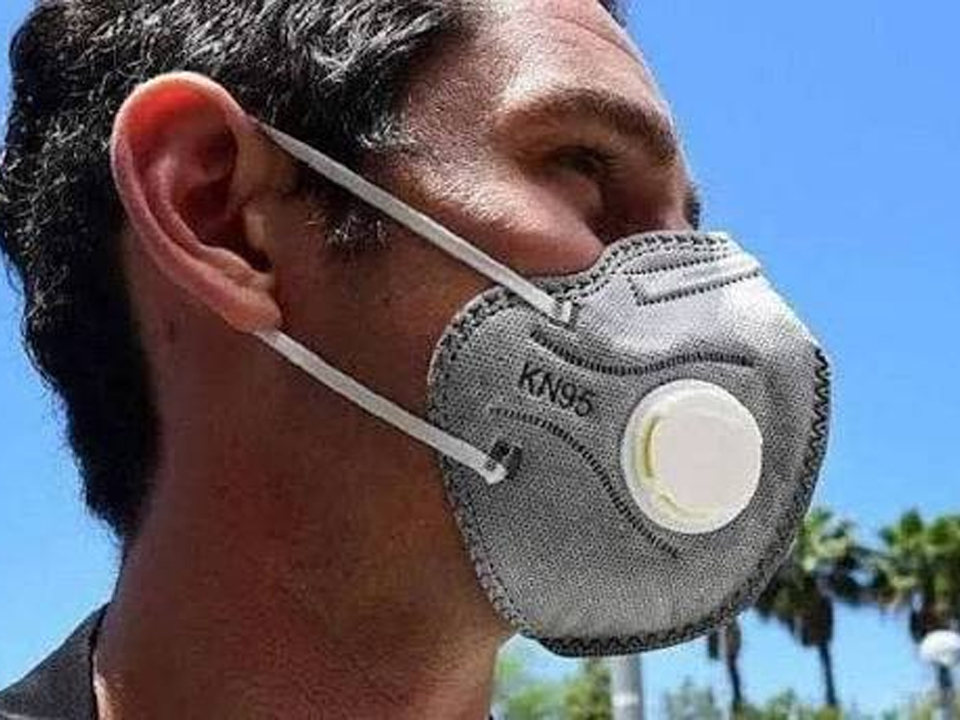
KN95 (China, GB 2626) and N95 (US, NIOSH) respirators are tested under different standards, with different test aerosols, flow rates and fit or leakage criteria. Their filtration targets can look similar to FFP2 on paper. A KN95 is still not an FFP2, and it cannot be sold as a CE-marked respirator unless it independently completes the EU route. If a supplier describes a product as “FFP2 equivalent” or “KN95 / FFP2 compliant,” ask which certificate covers the claim and which standard was used in the test report.
How Do You Verify an FFP2 Supplier’s CE and EN 149 Claims Step by Step?
Verification works best as a cross-check between four items: the product marking, the certificate, the notified body’s own listing and the declaration of conformity. Each should identify the same manufacturer and the same model. Treat any gap as a question for the supplier, not a reason to assume bad faith, since paperwork errors do occur.
Step 1: Inspect the product and packaging samples
Check the respirator body, the unit packaging and the outer carton. Look for the following:
The CE marking with a four-digit number.
The full standard reference.
The class (FFP2), with NR or R and D if applicable.
The manufacturer name and address.
A model or batch reference.
Storage conditions and a manufacturing or expiry date.
Look closely at the CE logo itself. The genuine mark follows specified proportions. A lookalike sometimes described as a “China Export” mark has different letter spacing and is not a conformity marking.
Step 2: Request the EU type-examination certificate
Request the full certificate, not a cover page or screenshot. Check these points:
It names the manufacturer who appears on your product.
The model reference matches.
The listed variants cover your configuration, for example with or without an exhalation valve, or ear-loop versus head-strap.
The standard and PPE regulation are the correct ones.
The validity date has not passed.
Certificates issued under the old Directive 89/686/EEC do not substitute for certificates under Regulation (EU) 2016/425 for current production.
Step 3: Check the notified body independently
Look up the four-digit number in the European Commission’s NANDO database. Confirm that the body is notified under the PPE Regulation for respiratory protective equipment. Then contact the notified body and ask it to confirm that the certificate number exists and relates to the named manufacturer and model. Use contact details taken from NANDO, not from the supplier’s documents. Response times vary between bodies.
Step 4: Review the declaration of conformity
The EU declaration of conformity should identify the manufacturer, the model, the legislation and the harmonised standard applied. It should name the notified body that issued the type-examination certificate, with its number, and the body involved in production control. It should be signed by an identifiable person and dated. A declaration that cites a different regulation or a different product name than the certificate is a discrepancy to resolve before you order.
Step 5: Match the test reports and production control to your lot
Ask for the EN 149 test report behind the certificate and confirm it refers to the same model and materials. Then ask how production is controlled: Module C2 or Module D, which body performs it, and how batch traceability works on the production line. For a first order, many buyers add an independent test of a sample from the actual shipment at an accredited laboratory. This is a business decision about risk and cost, not a legal requirement in itself.
Which Claims Should Trigger Further Questions?
Some claims are common in supplier quotations and product listings but do not by themselves establish compliance. The table lists frequent examples and the follow-up each one deserves.
Supplier claim
Why it is not sufficient
What to ask for
“CE certified” with no notified body number
Category III respirators require notified body involvement
Certificate, notified body number, and NANDO match
“Tested to EN 149” with a lab report only
A test report is not conformity assessment
Type-examination certificate and DoC
“FDA registered” or “NIOSH style”
US references do not create EU conformity
EU route documents
Certificate shows a different company name
The certificate holder may be a factory, trader or former brand owner
Authorisation, OEM/private-label arrangement, and the certificate holder’s role
Certificate covers “FFP2 masks” generally
Certificates cover defined models and variants
Model-specific annex
Certificate lacks an expiry date or has expired
Validity must be current for the production period
Current valid certificate and renewal evidence
“Medical” or “surgical” use stated
Medical device claims follow a separate regulation, (EU) 2017/745, and a different standard, EN 14683, for surgical face masks
Separate certificate and intended-purpose statement
OEM and private-label supply deserves particular attention. If your brand name will appear on the respirator, you may assume the legal duties of the manufacturer, depending on how the arrangement is set up. The certificate, technical file and declaration then need to cover your branded product, not only the factory’s own model. Agree this before artwork is approved, not after the pallets arrive.
Applying the Same Checks to Mixed-Category Orders
Buyers who consolidate several disposable items from one factory sometimes see the same compliance language repeated across a catalogue. Items such as disposable fitted bed covers for treatment tables or disposable nonwoven pillow covers for care facilities are bedding textiles, not respiratory protection. EN 149 and a PPE type-examination certificate therefore have no bearing on them. Their quality and compliance questions follow different rules, such as material specification, fire-behaviour requirements for the destination market, and any intended-use claims. A supplier that attaches one certificate to everything on a quotation is a reason to ask which document belongs to which SKU.
What Should Buyers Specify Before Requesting a Quote?
An FFP2 quotation is only comparable between suppliers when each one is quoting against the same evidence requirements. Put these items in the RFQ:
Destination market and role: EU, UK or another jurisdiction, and whether your company is importer, distributor or brand owner. UK supply follows its own PPE rules and marking, so do not assume an EU certificate covers it.
Required designation: FFP2 NR, or FFP2 R if reuse is intended, with or without D marking.
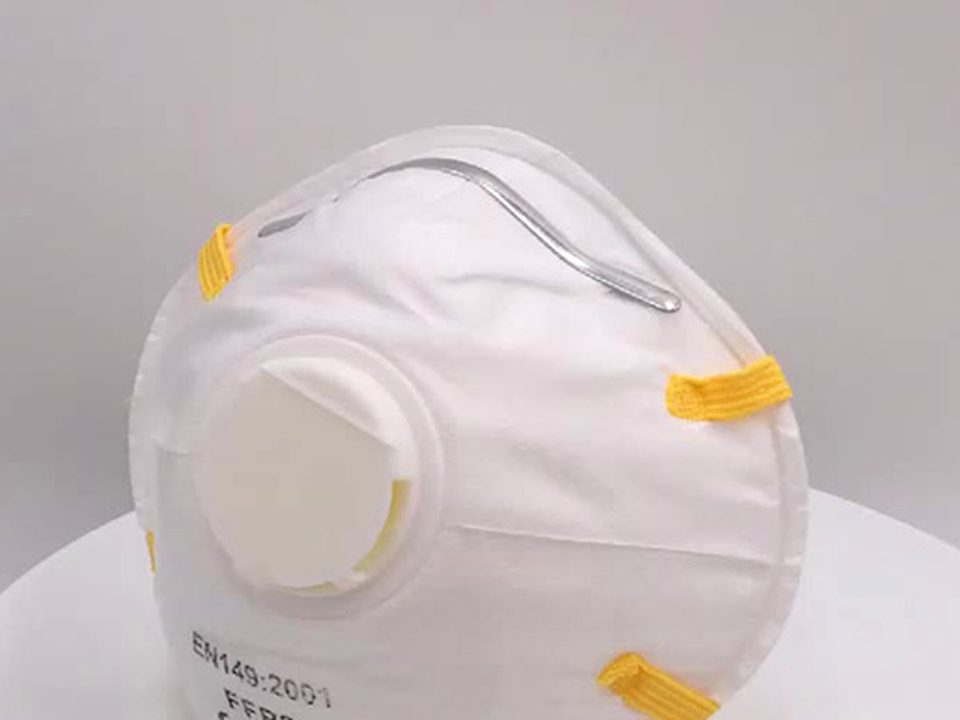
Model configuration: headband or ear loop, valve or no valve, folded or cup shape, size range, nose clip details. Variations may need separate certificate coverage.
Documents required before order: full type-examination certificate, DoC, EN 149 test report, notified body number for production control, and instructions for use in the destination language.
Marking and packaging: standard reference, class, manufacturer or brand name, batch number, storage conditions and date information on product and carton.
Private label or OEM terms: who holds the certificate, who is named as manufacturer, and how a change of branding is handled.
Batch controls: lot traceability, retained samples and the supplier’s willingness to accept third-party sampling.
Volume, lead time and shipping: MOQ, delivery schedule and storage conditions during transport. Packaging damage can compromise a respirator even if its filter is sound.
As an illustrative example, not a real customer case, imagine two quotations for the same model at different prices. One includes a model-specific certificate, a DoC naming the notified body and an offer of batch test reports. The other offers a generic “CE” statement. The cheaper one has a lower unit price, but it pushes verification costs and the risk of a blocked shipment or rejected stock onto the buyer. The lowest unit price may not be the lowest total cost.
For a final check before approving a purchase order, confirm that four items match: the marking on the sample, the certificate details, the NANDO listing and the declaration of conformity. If one cannot be matched, hold the order until the supplier explains the discrepancy in writing.
Frequently Asked Questions
Does a CE mark alone prove an FFP2 respirator is compliant?
No. The mark is a claim by the manufacturer. For FFP2 respirators, you should also confirm the notified body number, the type-examination certificate, the declaration of conformity and the EN 149 designation. All of them should refer to the same manufacturer and model.
What does FFP2 NR D mean on a respirator?
FFP2 is the performance class under EN 149. NR means non-reusable, intended for use during a single shift. D means the respirator passed the dolomite dust clogging test. A reusable product would be marked R instead of NR.
How can I check a notified body number on an FFP2 respirator?
Search the four-digit number in the European Commission’s NANDO database. Confirm the body is notified under the PPE Regulation for respiratory protective equipment. Then contact it using NANDO’s details to confirm the certificate number and model, rather than relying on supplier-provided contacts.
Is a KN95 respirator the same as an FFP2 respirator?
No. KN95 is tested under China’s GB 2626, and FFP2 under EN 149 with a CE route involving a notified body. Filtration levels may look similar. KN95 cannot be sold in the EU as a CE-marked FFP2 respirator unless it has completed the EU conformity process.
Can an EN 149 test report replace a CE certificate?
No. A test report shows that sampled units met the test requirements at the time. A Category III respirator also needs a notified body type-examination certificate, a declaration of conformity and production control. Treat the test report as supporting evidence only.
What should an EU declaration of conformity for FFP2 respirators include?
It should identify the manufacturer, the model, Regulation (EU) 2016/425, the standard applied such as EN 149:2001+A1:2009, and the notified bodies involved, with their numbers. It should be dated, signed by a named person, and match the product and certificate details.