Tell us what products you need, your target market, estimated quantities, required specifications, packaging requirements, and any documentation your company requires.
Still Looking for a Reliable Disposable PPE Supplier?
Tell us what disposable PPE you need, including specifications, quantity, target market, and OEM needs. We’ll review it and recommend suitable options.
Contact Our Team
Tell us what products you need, your target market, estimated quantities, required specifications, packaging requirements, and any documentation your company requires.
Have a PPE Product Requirement ? Talk to Our Specialists
Get practical guidance on disposable PPE specifications, materials, sizing, packaging, private labeling, documentation, and bulk production requirements.
“FDA registered” and “FDA cleared” appear side by side on mask spec sheets, but they describe different things. Registration means a manufacturer has listed its establishment and devices with the U.S. Food and Drug Administration. Clearance means FDA reviewed a premarket notification (510(k)) for a specific device and allowed it to be marketed. A registered facility can make a mask that has never been cleared. For buyers importing or distributing surgical or procedure masks into the U.S., that gap decides whether a shipment is compliant, defensible to customers, and safe to resell. This guide explains how to read each claim, check it, and write RFQs that ask for the right proof.
What Does “FDA Registered” Mean for a Mask Supplier?
“FDA registered” means the establishment has registered with FDA and, usually, listed its devices. It does not mean FDA has evaluated, tested, or endorsed the mask. FDA’s own regulation, 21 CFR 807.39, states that registration or a registration number does not denote approval of the establishment or its products. It adds that any representation creating an impression of official approval because of registration is misleading and constitutes misbranding.
That wording has a practical consequence. A supplier that presents a registration number as proof of quality, or sells a “FDA certificate” as if it were an approval, is making a claim the regulation itself calls misleading. Registration is still worth asking for. A manufacturer that cannot show registration, where it is required, has not cleared a basic hurdle for supplying medical devices to the U.S. market. But it is a starting point, not evidence that a mask performs.
What Does “FDA Cleared” Mean, and Is It the Same as “FDA Approved”?
“FDA cleared” means FDA reviewed a 510(k) premarket notification for that device and found it can be marketed. “FDA approved” is a different term, normally reserved for the premarket approval (PMA) pathway used for the highest-risk devices. Most medical masks do not go through PMA, so a supplier claiming a surgical mask is “FDA approved” is either using loose language or misunderstanding the pathway. Treat it as a prompt to ask for the 510(k) number.
FDA states that surgical masks are regulated under 21 CFR 878.4040. These are loose-fitting, disposable devices that may be labeled as surgical, isolation, dental, or medical procedure masks. FDA also tells buyers where to check: its face mask and respirator FAQ says FDA-cleared surgical masks and respirators can be identified by searching the 510(k) Premarket Notification database.
FDA Registered, Listed, Cleared, Approved, or Authorized: How the Claims Compare
The table below separates the terms that most often get blurred in supplier documents. The “what it does not prove” column matters most when you are screening quotes.
Claim on the document
What it generally indicates
What it does not prove
What to ask for
FDA registered
The establishment is registered with FDA
That any product was reviewed, tested, or cleared
Registration number, plus a matching device listing
FDA listed
The device is listed under the establishment’s registration
That FDA agreed the device may be marketed
Listing details and product code
FDA cleared (510(k))
FDA reviewed a 510(k) for a specific device
That your purchased design, materials, or lots match the cleared device
K-number, decision letter, database entry
FDA approved
Usually PMA-type approval, which is uncommon for masks
Anything, if used loosely for a mask
Clarification of the actual pathway
FDA EUA
Temporary emergency authorization, if currently in effect
Long-term marketability once the EUA ends
Current EUA status and its scope
NIOSH approved
A respirator met NIOSH requirements
That a surgical mask has fluid-resistance clearance, or that a respirator is FDA cleared for healthcare use
NIOSH approval number and FDA status where relevant
ASTM F2100 tested
Test results exist for stated performance levels
That the test covered your exact lot, or that FDA cleared the product
Accredited lab report for the exact construction
Which Mask Types Need Which Kind of Proof?
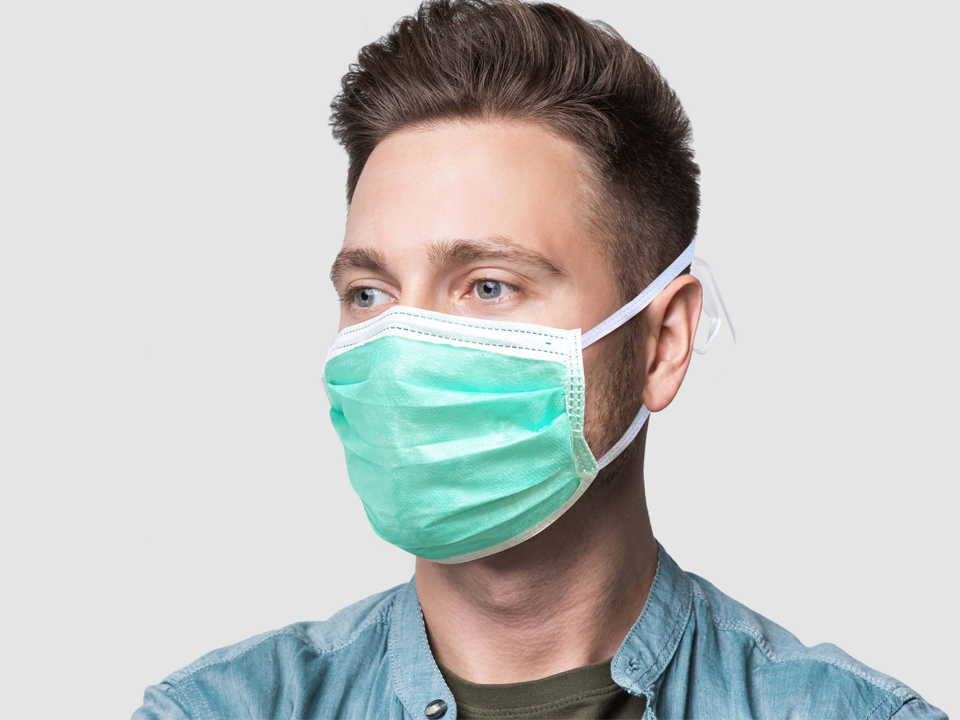
The right proof depends on what the product is intended to do, and the label should say so. FDA’s classification separates several products that buyers often group together:
Surgical mask. A regulated device with a fluid barrier function, subject to 21 CFR 878.4040. This is where 510(k) clearance is the key document.
Barrier face covering. Described by FDA with reference to ASTM F3502-21. It provides source control and some particulate filtration, and is not a substitute for a surgical mask or respirator.
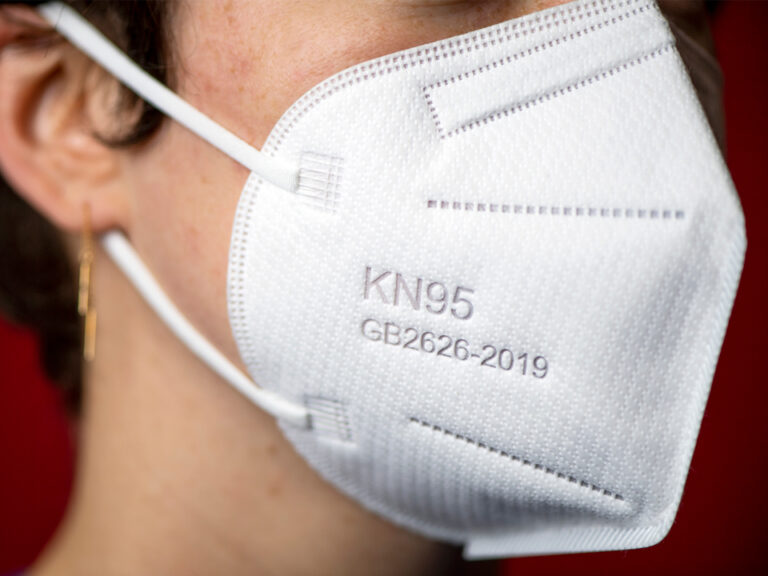
N95 respirator. Most are NIOSH-regulated for industrial use. Surgical N95 respirators used in healthcare are class II devices regulated by FDA and NIOSH. FDA says those under product code MSH are exempt from 510(k) unless they are intended to prevent specific diseases or infections, or are labeled as filtering surgical smoke or plume.
The N95 detail shows why “FDA cleared” is not a universal checkbox. For a surgical N95, NIOSH approval is the core document, and FDA clearance may or may not apply depending on the claims. For a three-ply ear-loop procedure mask, the 510(k) is typically the document that matters. Match the proof to the product category before you evaluate any certificate.
How to Verify an “FDA Cleared” Mask Claim in Five Steps
Get the K-number. Ask for the 510(k) number and the FDA decision letter. A supplier that cannot name the number does not have a verifiable clearance claim.
Search the FDA database yourself. Use the 510(k) Premarket Notification database linked from FDA’s guidance. Confirm the device name, applicant, decision, and product code. Do not rely on a PDF copy supplied by the seller.
Check who holds the clearance. The applicant in the database must match the manufacturer, or the supplier must show a documented right to market the cleared device under your brand.
Confirm the product you are buying is the cleared design. Compare materials, layer structure, dimensions, nose wire, ear loops, and the meltblown supplier against the cleared device. Changes that could significantly affect safety or effectiveness may require a new 510(k), so a “similar” mask is not a cleared mask.
Match test evidence to the claim. If the label says ASTM F2100 Level 2, ask for test reports from a recognized laboratory covering, typically, bacterial filtration, particulate filtration, differential pressure, fluid resistance, and flammability for the production construction.
What Changes in an OEM or Private-Label Arrangement?
Private labeling is where clearance claims most often become uncertain. A factory may hold a 510(k) for its own branded mask, yet quote you a custom-printed version with a different box, a different strap, or an alternative nonwoven source. Ask in writing who the 510(k) holder is, whether your label may reference the K-number, who is responsible for complaint handling, and how the factory will notify you of any material or process change. If the answers are vague, the clearance may not extend to your SKU.
An illustrative example, not a real customer case: a distributor receives a quote for “FDA registered, ASTM Level 3” ear-loop masks with no K-number. Under the checklist above, the distributor would hold the order until the supplier produces a database-verifiable 510(k), a lab report for the quoted construction, and confirmation that the private-label version matches the cleared design.
Is FDA Clearance Enough to Guarantee Quality?
No. Clearance is a necessary starting point for a surgical mask, but it does not guarantee that every lot performs the same way. One study illustrates why buyers should look beyond the certificate.
A NIOSH-affiliated study of FDA-cleared surgical masks tested five models and found that filtration of submicron particles varied widely between them. Its authors concluded that not all FDA-cleared surgical masks provide similar protection against particles in the size range of many viruses. The study is from 2009, tested only five models, and measured particle penetration rather than the fluid barrier function a surgical mask is primarily cleared for, so it should not be read as a ranking of today’s products. The relevant point is narrower: clearance sets a market-entry threshold, not a uniform performance level.
This is why lot-level evidence matters. Ask whether the factory tests incoming meltblown, how it samples finished lots, and what happens when a batch fails. A manufacturer with consistent in-process controls and a clear change-control procedure is often a safer choice than one with the lowest unit price and a clearance letter.
Is a Higher ASTM Level Always Better?
No. ASTM F2100 levels differ most visibly in fluid resistance. One supplier summary of the standard lists 80, 120, and 160 mmHg for Levels 1, 2, and 3, with filtration and airflow-resistance limits also stated per level. ASTM F2100 is revised periodically, so check which edition a test report references. A Level 3 mask makes sense where splash or spray exposure is likely, such as surgery. For low-risk uses, it can add cost without adding benefit. Specify the level your end users’ tasks require rather than defaulting to the highest tier.
What Should Buyers Know About Emergency Use Authorizations?
If a supplier cites an EUA instead of a 510(k), check the date. FDA’s face mask FAQ says non-NIOSH-approved filtering facepiece respirator EUAs were revoked on July 6, 2021. The same page says that on June 29, 2026, the HHS Secretary determined circumstances no longer justify emergency use authorization for personal respiratory protective devices, among other categories. The associated declarations are set to terminate effective December 26, 2026, after which the COVID-19 EUAs for devices listed there will no longer be in effect. Anyone buying respirators or masks against an EUA should confirm the current status and have a clear regulatory pathway for continued sales.
Does the Same Intended-Use Test Apply to Other Disposable Items in the Order?
Yes, the principle carries over even when the regulatory outcome differs. Many mask buyers also source other single-use items for the same customers, and the supplier’s stated use is the first thing to read. As examples from one manufacturer’s catalog, PE/CPE sleeve covers are described as film covers for the forearm and clothing sleeve in workplace use, while PP and SMS nonwoven sleeve covers are described for settings including hospitals, cleanrooms, food workplaces, and labs. In the beauty category, disposable nonwoven hair bands and nonwoven face rest covers are described for salon and spa use.
These pages describe products and intended settings, not regulatory status. Whether any non-mask item needs FDA premarket clearance depends on the claims made about it, so request documentation that matches the product’s actual claims instead of assuming a mask-style clearance applies. Keep marketing language aligned as well: describing a general-purpose item with medical claims can change how it is regulated.
What Should You Verify Before Requesting a Quote for Medical Masks?
Prepare the following before sending an RFQ. Each item changes either the documents a supplier must supply or the price it can quote.
Target market and intended use. State the U.S. market and whether the mask is for procedure, surgical, dental, or general use. This determines whether 510(k) clearance is required. Requirements differ in other markets.
Required ASTM F2100 level. Level 1, 2, or 3, plus any specific requirement for fluid resistance or breathability.
Clearance route. Ask whether the supplier supplies its own cleared product or will manufacture to your specification. If the latter, ask who will hold and maintain the 510(k).
Design details. Ear loop or tie-on, nose wire, size, color, shield or no shield. Anything that differs from the cleared device needs a regulatory assessment.
Labeling and packaging. Box and carton artwork, lot coding, expiry or date marking, and language requirements. Printed claims must be supported by the paperwork.
Test evidence. Lab reports for the production construction, and the frequency of lot testing.
Quality system. Request evidence of the manufacturer’s quality management system and its change-notification process.
Volume and delivery. MOQ, annual forecast, lead time, and shipping method, so the supplier can quote realistic pricing for tested, documented product rather than uncontrolled stock.
Treat any supplier that answers a documentation request with a registration number alone as having answered only part of the question. For distributors, the strongest position is a verified K-number, a matching lab report, and a written change-control agreement.
Frequently Asked Questions
Is FDA registered the same as FDA approved?
No. Under 21 CFR 807.39, registration or a registration number does not denote approval of the establishment or its products. Registration shows the facility is on FDA’s records, not that FDA reviewed any mask.
What does FDA cleared mean on a surgical mask?
It means FDA reviewed a 510(k) premarket notification for that specific device and allowed marketing. You can check by searching FDA’s 510(k) database for the K-number, applicant, and device name.
Do all face masks need FDA clearance?
No. FDA distinguishes face masks, barrier face coverings, surgical masks, and respirators. Surgical masks fall under 21 CFR 878.4040, while a face mask used for source control may not meet any fluid barrier or filtration level. The label and intended use determine the requirement.
How can I check whether a mask supplier’s 510(k) claim is real?
Request the K-number and decision letter, then search the FDA 510(k) database yourself. Confirm that the applicant, device description, and product match what you are buying, and that test reports cover the production construction.
Can an OEM factory sell me a mask under my brand using its FDA clearance?
Possibly, but confirm it in writing. Ask who holds the 510(k), whether your label may reference it, and whether your version matches the cleared design. A changed material or construction may not be covered by the original clearance.
Is an ASTM Level 3 mask always better than Level 2 or Level 1?
No. Levels differ in fluid resistance and in filtration and breathability limits. Level 3 suits high splash or spray exposure, such as surgery, but a lower level may suit low-risk use. Choose by task risk, comfort, and cost.