

Disposable Lab Coats & Jackets for Laboratory, Healthcare and Industrial Use
Disposable lab coats are single-use protective garments worn over normal clothing in laboratories, clinics, controlled work areas and similar environments. Depending on their material, construction and the workplace hazard assessment, they may help keep clothing and skin cleaner and reduce transfer of contaminants between work areas. Common choices include lightweight non-woven polypropylene, SMS fabric and coated materials. The right lab coat depends on the task—not simply the color, style or price—so buyers should compare barrier needs, fit, cuffs, closure and verified product specifications before ordering.
What are disposable lab coats used for?
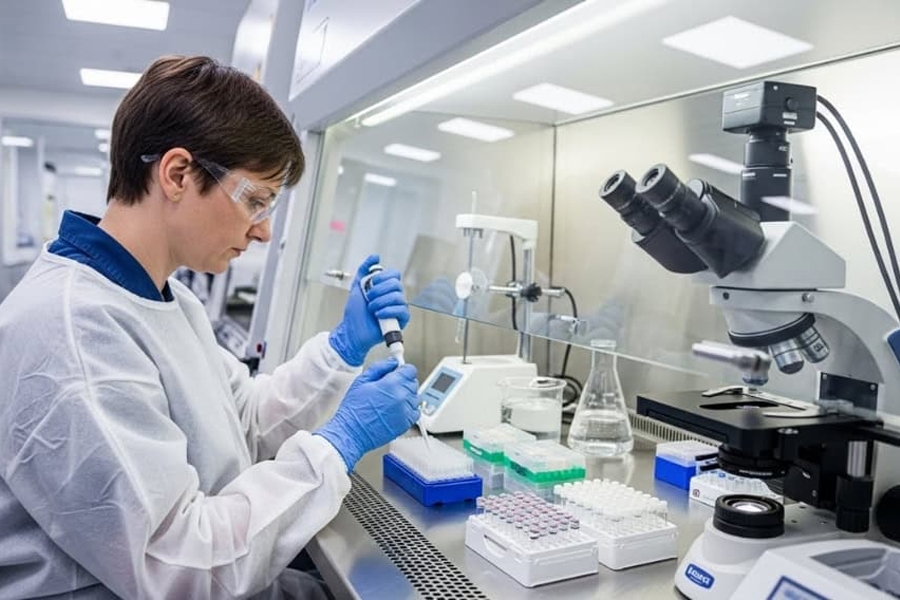
A disposable lab coat provides temporary outer coverage for work where clothing may be exposed to dust, dirt, particulate contamination or limited splash, subject to the specific garment’s performance. Single-use protective clothing is typically removed before leaving the work area and discarded when contaminated according to facility procedures. In laboratory and healthcare settings, protective clothing is only one part of risk control; gloves, eye protection, respiratory protection or other PPE may also be required for the task.



Polypropylene vs SMS: which lab coat material fits the job?
Polypropylene lab coat fabric is commonly used for lightweight, general-purpose disposable garments. SMS—spunbond-meltblown-spunbond—is a layered nonwoven construction that can provide a stronger barrier than basic spunbond material while remaining breathable, depending on the product design. Some applications may instead call for polyethylene-coated or other specialized fabrics when greater fluid resistance is needed. Buyers should compare the actual data sheet rather than assume that terms such as “50 gsm,” “waterproof,” “fluid-resistant” or “static-free” apply to every disposable lab coat.
How much protection does a disposable lab coat provide?
Protection varies by fabric, seams, closure, coverage and the hazard involved. A basic polypropylene or disposable SMS lab coat should not automatically be treated as chemical protective clothing, biological protection, flame-resistant apparel or a substitute for a hazard-specific gown or suit. OSHA guidance emphasizes matching PPE to identified hazards and understanding product limitations. Even Tyvek garments vary by model and application, so brand or material names alone are not enough to establish suitability.
Which cuffs, collars, pockets and closures matter?
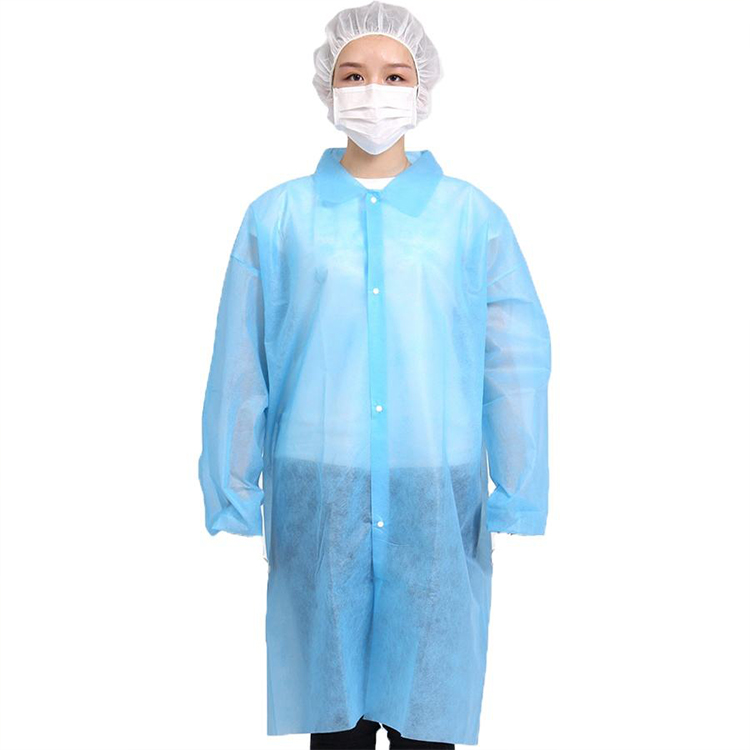
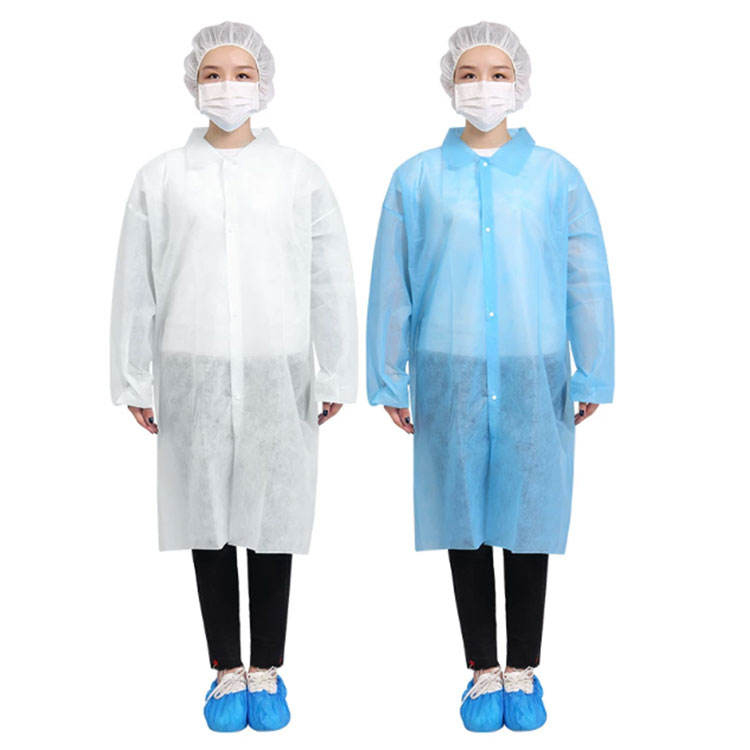
Design details affect coverage, convenience and fit. Knit cuffs or an elastic cuff can hold the sleeve closer to the wrist, while open cuffs may suit lower-control tasks. A knit collar, standard collar or higher neckline changes upper-body coverage. Snap front and zipper closure styles make donning and removal straightforward. One pocket, 2 pockets or front pockets may be useful for pens or small tools where the procedure allows them. Knee-length styles offer more coverage than shorter jacket designs, but the required cut should follow the application.
How do sizing, fit and breathability affect comfort?
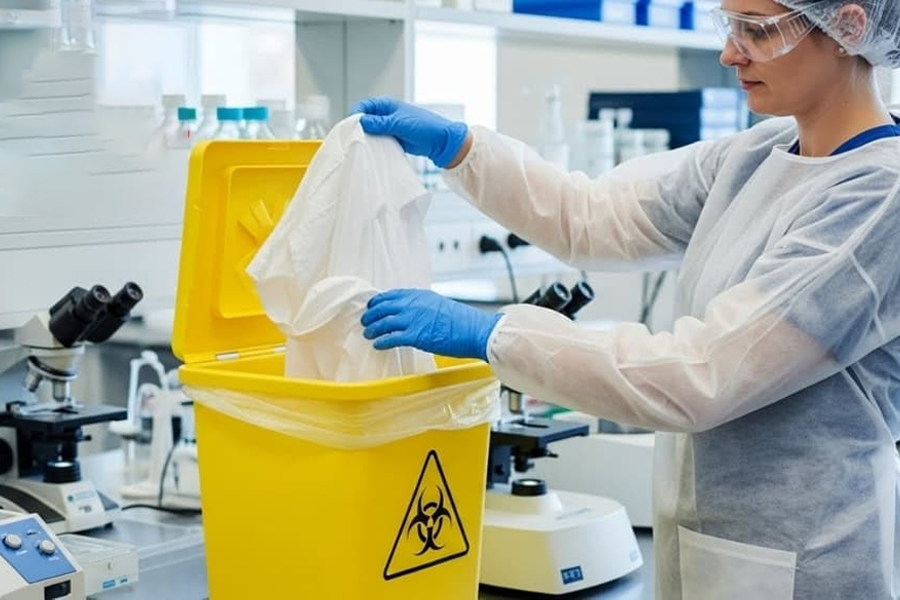
Fit matters because protective clothing must stay in the intended position without unnecessarily restricting movement. OSHA advises selecting the right size and considering wearer comfort as part of PPE selection. For purchasing, check the supplier’s size chart rather than assuming a unisex lab coat will fit every user the same way. Confirm availability from small through X-large and larger sizes as needed. Lightweight polypropylene and breathable SMS material can improve comfort, but softness and breathability should be evaluated alongside the required barrier and coverage.
Disposable vs reusable lab coats: which is better?
Disposable and reusable lab coats solve different operational needs. Disposable lab coats avoid a laundering cycle and can simplify change-out after contamination, but they create a recurring supply and waste stream. Reusable coats—often made from washable woven fabrics such as polyester blends—can suit programs with controlled institutional laundering. CDC laboratory guidance says single-use protective clothing should be discarded with contaminated waste when appropriate, while reusable protective clothing should be sent for institutional laundering rather than taken home. The better choice depends on contamination risk, workflow and total program requirements.
Where are disposable lab jackets commonly used?
Disposable lab jackets and coats can be considered for laboratory, healthcare, dental, medical lab, pharmacy, clinic, hospital, manufacturing and some food service environments when their verified performance matches the task. CDC dental guidance, for example, recommends protective clothing that covers skin and personal clothing likely to be soiled during procedures involving blood, saliva or other potentially infectious material. In cleaner production areas, requirements may focus more on particulate control or transfer between zones. A lab coat, gown, sleeve or cap should therefore be selected by function, not job title alone.
Frequently Asked Questions
What are disposable lab coats used for?
Disposable lab coats are worn over personal clothing to help reduce contamination and provide an additional protective layer in laboratories, clinics, healthcare facilities, and similar workplaces. The appropriate garment should be selected according to the actual workplace hazard.
Can disposable lab coats be reused?
Generally, no. Disposable protective clothing is intended for single use and should be discarded according to workplace procedures after use or contamination. CDC guidance also distinguishes single-use clothing from reusable garments that are sent for institutional laundering.
Are disposable lab coats considered PPE?
They can be part of a PPE system when they are selected to protect workers from identified hazards. However, a lab coat does not eliminate the hazard and may need to be used with gloves, eye protection, or other PPE.
Where are disposable lab coats commonly used?
Disposable lab coats may be used in laboratories, healthcare and dental settings, clinics, and other workplaces where protective clothing is needed to help prevent contamination of skin or personal clothing.
How do I choose the right disposable lab coat?
Consider the workplace hazard, material, coverage, size, fit, cuffs, closure, and required level of protection. Buyers should check the product specifications rather than assume that every disposable lab coat provides the same protection. OSHA recommends selecting PPE according to the hazards identified in the workplace.