Tell us what products you need, your target market, estimated quantities, required specifications, packaging requirements, and any documentation your company requires.
Still Looking for a Reliable Disposable PPE Supplier?
Tell us what disposable PPE you need, including specifications, quantity, target market, and OEM needs. We’ll review it and recommend suitable options.
Contact Our Team
Tell us what products you need, your target market, estimated quantities, required specifications, packaging requirements, and any documentation your company requires.
Have a PPE Product Requirement ? Talk to Our Specialists
Get practical guidance on disposable PPE specifications, materials, sizing, packaging, private labeling, documentation, and bulk production requirements.
Mortuary and funeral-care staff work with human remains, where contact with blood, body fluids, and embalming chemicals is a routine part of the job. The protective equipment they need differs from what a hospital ward or a general-purpose workshop would stock. In the United States, OSHA treats human remains as a potential source of occupational exposure, so employers must match protective equipment to the tasks their people actually perform. For operations and procurement teams, that raises practical questions. Which tasks need which gear? Which items are wearable PPE, and which are surface protection? How do you stock both in volume without overbuying or leaving gaps? This guide answers those questions and ends with a checklist of what to specify before requesting a bulk quote.
What Do OSHA Rules Require for PPE in Funeral and Mortuary Work?
There is no single, fixed “funeral PPE list” in U.S. regulation. Two OSHA standards shape most decisions: the bloodborne pathogens standard (29 CFR 1910.1030) and the formaldehyde standard (29 CFR 1910.1048).
On bloodborne pathogens, OSHA’s 1992 letter of interpretation to the National Funeral Directors Association states that employees handling a body must be protected against contact with blood and other potentially infectious materials. The same letter describes PPE selection as performance-based: the employer evaluates the task and the type of exposure expected, then chooses appropriate equipment. OSHA also made clear that it does not expect workers to wear every available item for every task. Protection should reflect the exposure that can reasonably be anticipated.
On chemicals, OSHA’s letter on formaldehyde exposure in the embalming and funeral home industry confirms that the formaldehyde standard applies to embalming. It sets a permissible exposure limit of 0.75 ppm as an 8-hour time-weighted average and a 2 ppm limit as a 15-minute short-term exposure. It also requires engineering controls, exposure monitoring, and adequate PPE.
These are U.S. federal rules. Operations outside the United States, and those in states with their own occupational safety programs, should confirm local requirements with a qualified safety professional. Nothing in this article is a compliance determination.
Why more PPE is not automatically better protection
A common assumption is that the safest approach is the heaviest, most complete protective kit on every case. The performance-based approach points the other way. Over-specified PPE adds heat stress, reduces dexterity, increases consumption and waste cost, and can encourage staff to skip steps. Under-specified PPE leaves gaps. The better question is what each task exposes a worker to, and what the lightest adequate barrier is for that exposure. Splash-heavy embalming and a routine casketing task do not need the same gown, and treating them as identical is both a safety and a budget error.
Matching PPE to Mortuary and Funeral-Care Tasks
The table below gives starting points for a task-based hazard assessment. It is not a substitute for one, and your exposure control plan should be the final authority.
Chemical-resistant gloves, impervious gown or apron, goggles or face shield, formaldehyde-rated respiratory protection where required, ventilation
Chemical compatibility data; respirator cartridge rating; fit testing
Cleaning and decontaminating the prep room
Contaminated surfaces, cleaning chemicals
Gloves suited to the disinfectant, apron, eye protection, boot or shoe covers
Glove resistance to the specific chemicals used
Remains with a known or suspected airborne or highly infectious disease
Aerosols, heavier fluid contact
Enhanced gown, respiratory protection, face shield, double gloves, as directed by current public health guidance
Current guidance from health authorities; training and fit-test records
Wearable PPE: What to Check Before You Buy
Gloves
Gloves take the most abuse in this work. Disposable nitrile gloves are the common base layer for body contact, and many teams wear a second pair, or a heavier outer glove, when sharps, bone fragments, or instruments are involved. Chemical exposure is a separate question: a glove that works well against body fluids may degrade or let formaldehyde permeate. Ask suppliers for chemical resistance data against the specific solutions in your prep room, check cuff length against your gown sleeves, and confirm size coverage for the whole team. Poorly sized gloves tear more easily in use and make double-gloving harder.
Gowns and aprons
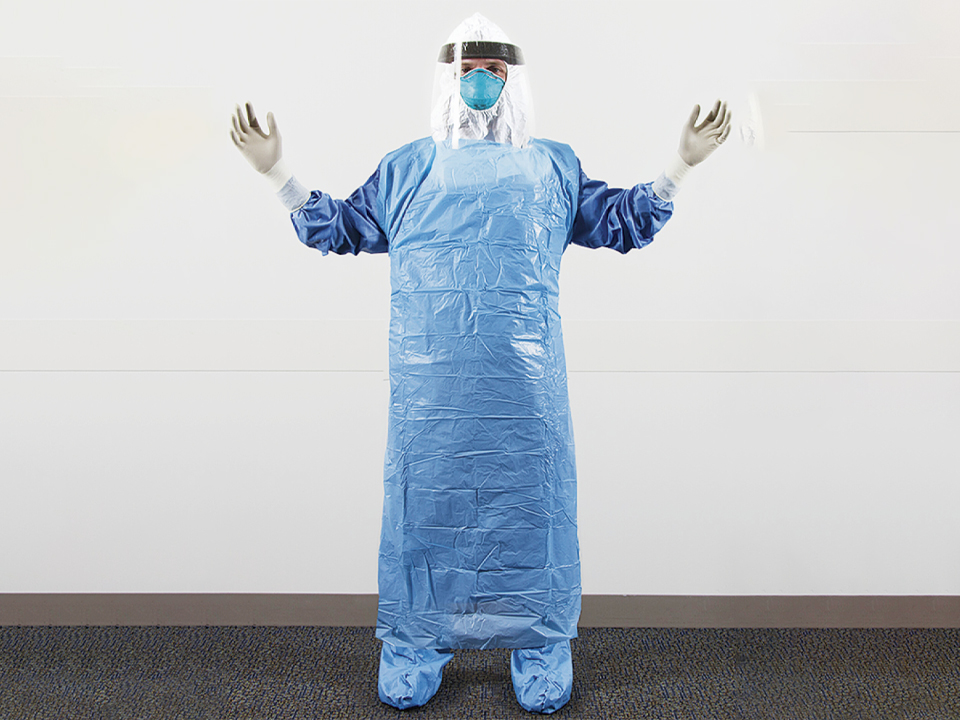
Gown choice depends on fluid load. A light nonwoven gown can be reasonable for dry-contact tasks. Embalming and heavy fluid release call for a gown or apron with a liquid barrier, such as a film-laminated or impervious construction. Ask whether the gown has been tested for liquid barrier performance, and which test method and level the supplier is referencing. Also check sleeve and cuff design: a gown with short sleeves and loose cuffs defeats the purpose if gloves do not overlap.
Face, eye, and respiratory protection
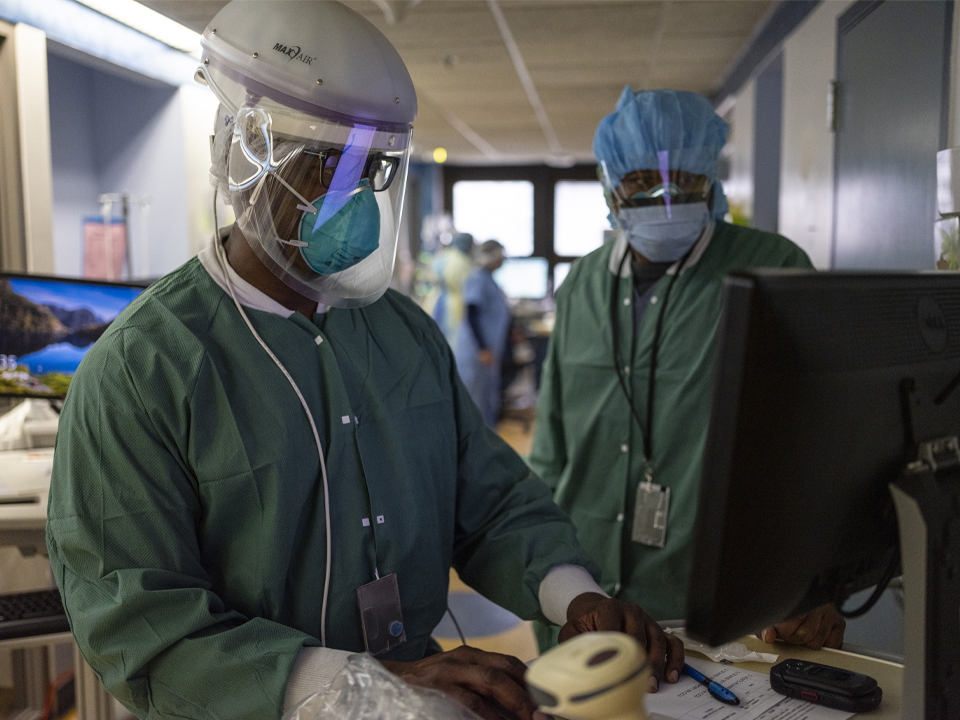
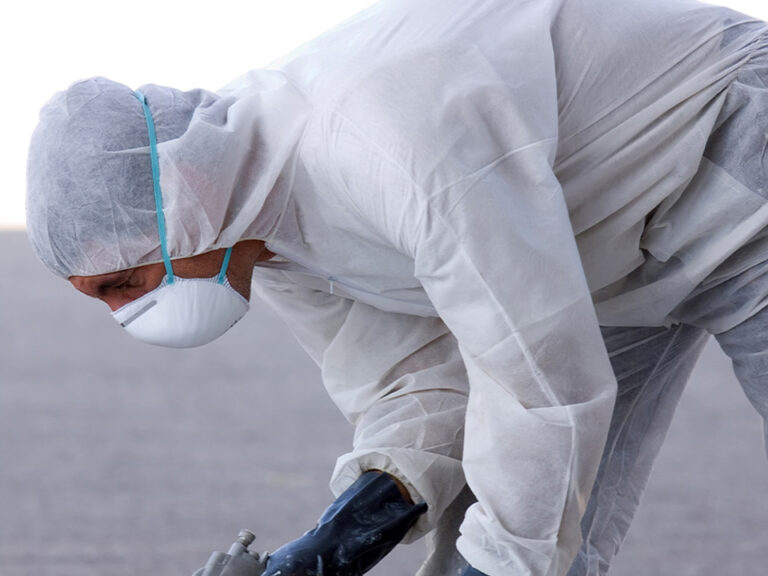
Splash is the main eye and mucous membrane risk, and a surgical-style mask alone does not seal the eyes. Goggles or a face shield belong with the mask for splash-prone tasks. Respiratory protection is where the most expensive mistakes occur. A particulate respirator such as an N95 filters particles, not chemical vapor. Formaldehyde protection is addressed in the OSHA formaldehyde standard (29 CFR 1910.1048), which describes respirators equipped with cartridges approved for formaldehyde and, in some situations, effective gas-proof goggles. Particulate respirators remain relevant for suspected airborne infectious disease, but they serve a different hazard. Do not let a stock of masks create the impression that the formaldehyde risk is covered.
Shoe covers and head covers
Floors in preparation rooms get wet. Shoe or boot covers reduce what gets tracked out, but only if the sole grips when wet and the cover stays on during movement. A slippery cover creates a fall risk that outweighs its contamination benefit. Request a sample and test it on your actual floor surface before committing to a large order.
Formaldehyde and Chemical Exposure: Where PPE Is the Last Line of Defense
PPE is the final layer, not the first. The OSHA letter above emphasizes engineering controls to bring airborne formaldehyde below the permissible limits, which means preparation room ventilation and local exhaust come before respirators. The standard also addresses direct contact. According to 29 CFR 1910.1048, skin and eye contact with solutions at or above 1 percent formaldehyde should be prevented with impervious chemical protective clothing and equipment such as goggles and face shields, and eyewash facilities are required in the work area where eyes may be splashed with solutions of 0.1 percent or more.
For buyers, the practical consequence is straightforward. Concentrated embalming fluids call for impervious aprons or gowns and chemical-resistant gloves, not standard exam-grade items. Buy from the chemical, not from the catalogue category.
Surface and Barrier Protection: The Layer PPE Lists Often Skip
Disposable sheets, covers, and drapes are not wearable PPE. They protect equipment, tables, and stretchers, which in turn limits how much contamination reaches staff hands, clothing, and the next case. They also cut cleaning time between cases. The product pages for the items below describe them as single-use covers for treatment tables, beds, procedural surfaces, and healthcare stretchers or cots, and do not state mortuary-specific performance claims. Fit for a preparation table or transport trolley depends on your equipment dimensions and the fluid load, so confirm suitability and request test data before standardizing.
Fitted covers for tables and trolleys
A fitted cover stays in place while staff move around the table. Elastic disposable bed covers in this range are listed with elastic at two ends, at four corners, or around the full edge. Sizes listed are 90×200 cm, 100×220 cm, and 140×240 cm, with custom sizing available, in 18–65 gsm. Material options include PP, SMS, PP+PE, SMS+PE, spunlace, and microporous. If your preparation work involves significant fluid, the laminated constructions are the ones to ask about first, because a plain nonwoven absorbs and can let liquid through. The nonwoven elastic bed covers listing shows the same elastic layouts and material combinations, so buyers comparing options can use it to cross-check specifications.
Flat sheets and rolls
Flat sheets are simpler than fitted covers, but they do not stay put. The disposable flat bed sheets page lists standard sizes of 70×180 cm and 90×100 cm, custom sizes, and weights from 18 to 120 gsm, packed 10 pieces per bag and 100 per carton. Check those dimensions against your table before ordering; a sheet that does not extend past the table edges protects less than it appears to. Buyers who want the same format described from the table-supply angle can also review these nonwoven flat sheets for treatment tables.
A roll lets staff cut to length. The disposable bed sheet roll is listed in 150 m rolls, in widths of 50, 60, 70, and 80 cm, with PP, SMS, spunlace, paper, and paper+PE options. The widest listed roll is 80 cm, so a roll suits lining or layering, not full table-and-drop coverage, unless a custom width is quoted. Rolls need a clean dispensing routine: if staff cut with contaminated gloves, the roll itself becomes a contamination route. Procurement teams comparing the PP versions can look at the PP flat sheet roll formats, which show the same widths and packing of one roll per bag and six per carton.
Drapes and stretcher sheets
The adhesive PP/PE drape sheets combine absorbent PP with a waterproof PE laminate in 40–65 gsm, blue, in sizes from 50×50 cm to 120×180 cm. They are individually packed and EO-sterilized. Sterile packaging adds cost, and most mortuary surface tasks do not obviously require it, so ask whether a non-sterile version is available if you only need localized, secured coverage.
For transport, disposable stretcher cot sheets are listed in hydrophilic PP nonwoven laminated to CPE cast film or microporous PE film, standard size 90×230 cm, 55–80 gsm, packed 5 per bag and 50 per carton. Confirm the length against your cots and transfer trolleys, and decide whether you need extra length to cover and wrap the remains.
How the formats compare
Format
Fit and stability
Best suited to
Main trade-off
Ask the supplier
Elastic bed cover
Stays in place with elastic edges
Prep tables and trolleys that stay in one position
Usually priced above comparable flat sheets; confirm in the quote
Elastic layout; laminated vs. plain material
Flat sheet
Loose, can shift
Layering, quick change between cases
Needs overlap and sizing check
Dimensions beyond table edges; gsm
Sheet roll
Cut to length by the user
Lining, headrests, variable lengths
Max listed width 80 cm; dispensing hygiene
Custom width; core and packing
Adhesive drape
Adhesive holds position
Localized coverage or securing a work area
Sterile packing adds cost
Sterile or non-sterile; adhesive strip position
Stretcher cot sheet
Gathered, elasticized section
Transport stretchers and cots
Standard 90×230 cm may not fit every cot
Film type; custom length
Specifications in the table come from the supplier’s product pages. Comments on trade-offs are qualitative assessments, not tested performance claims.
Donning, Doffing, Disposal, and Training
Removal is a high-risk step for contaminating skin and clothing, so it needs as much attention as the task itself. A facility-written sequence works best. In general, staff put on the gown first, then mask or respirator, then eye protection, then gloves over the gown cuffs. Removal reverses the order for the most contaminated items: outer gloves and gown first, hand hygiene, then face protection. Your exposure control plan should hold the final sequence, and staff need practice, not just a poster on the wall.
Disposal also deserves attention. OSHA’s 1992 letter clarifies that a human body is not “regulated waste,” but its definition of regulated waste does include contaminated items that would release blood or other potentially infectious materials in a liquid or semi-liquid state if compressed. A saturated disposable cover can fall into that category. Confirm how your jurisdiction and your waste hauler classify items from a case, and size your biohazard bag and bin supply accordingly.
What Should Buyers Specify Before Requesting a Quote?
Vague RFQs produce quotes that cannot be compared. Before contacting a supplier, gather the following:
Task list and case volume. Which tasks need which items, and roughly how many cases per month per location. This drives quantity and packing format.
Equipment dimensions. Length and width of each table, trolley, stretcher, and cot, including the drop you want past each edge.
Fluid load. Light residual fluid or heavy release. This determines whether laminated or film-backed material is necessary, or whether lighter nonwoven is acceptable.
Material and weight. PP, SMS, PE laminate, or spunlace, with the gsm range you will accept.
Sterile or non-sterile. Particularly for drapes, since sterile individual packing changes cost.
Packing and printing. Pieces per bag, bags per carton, and whether you need printed packaging for private label or distribution.
Test and documentation requirements. Liquid barrier or chemical resistance data, safety data, and any paperwork your market requires.
Samples. Ask for samples and trial them on real equipment, with real staff, before approving a production run.
Commercial terms. Confirm MOQ, lead time, and shipping terms directly with the supplier. Do not assume they match another supplier’s.
As an illustrative example, a three-location funeral group might discover during sampling that a standard 70×180 cm flat sheet fails to cover its wider preparation tables, while a custom-width roll or fitted cover solves the problem. Finding that on a sample order costs far less than finding it on a full carton run.
Buyers who have these details ready can submit them through the RFQ form on the relevant product pages, which shortens the quotation cycle and makes supplier comparisons more reliable.
Frequently Asked Questions
Is PPE legally required for funeral home employees in the United States?
OSHA’s bloodborne pathogens standard requires employers to provide appropriate PPE where exposure to blood or other potentially infectious materials is reasonably anticipated, and the formaldehyde standard adds chemical protection duties for embalming. Requirements vary by task and jurisdiction, so confirm local rules.
What PPE does an embalmer typically need?
Typical considerations include chemical-resistant gloves, an impervious gown or apron, goggles or a face shield, and respiratory protection where formaldehyde exposure requires it, supported by ventilation. Final selection should follow a documented hazard assessment and exposure monitoring.
Does an N95 respirator protect against formaldehyde vapor?
No. An N95 filters particles, not chemical vapor. The OSHA formaldehyde standard describes respirators with cartridges approved for formaldehyde. Confirm the right respirator type, cartridge, and fit testing with a qualified safety professional.
Are disposable bed sheets and table covers considered PPE?
No. They are surface protection, not wearable PPE. They help keep tables, trolleys, and stretchers cleaner between cases and reduce the contamination that reaches staff, but they do not replace gloves, gowns, or eye protection.
Which disposable cover works best for a stretcher versus a preparation table?
A stretcher or cot usually takes a dedicated cot-size sheet, such as a 90×230 cm sheet with a gathered, elasticized section. Prep tables often suit fitted elastic covers or properly sized flat sheets. Match the cover to equipment dimensions and fluid load.
How should soiled disposable covers be discarded?
Classification depends on how saturated the item is and on local waste rules. OSHA’s regulated-waste definition includes contaminated items that would release blood or infectious material in liquid form if compressed. Confirm handling with your waste hauler and exposure control plan.