Tell us what products you need, your target market, estimated quantities, required specifications, packaging requirements, and any documentation your company requires.
Still Looking for a Reliable Disposable PPE Supplier?
Tell us what disposable PPE you need, including specifications, quantity, target market, and OEM needs. We’ll review it and recommend suitable options.
Contact Our Team
Tell us what products you need, your target market, estimated quantities, required specifications, packaging requirements, and any documentation your company requires.
Have a PPE Product Requirement ? Talk to Our Specialists
Get practical guidance on disposable PPE specifications, materials, sizing, packaging, private labeling, documentation, and bulk production requirements.
Choosing cleanroom PPE by room class alone is a common shortcut, and it fails in two opposite ways. Garments may be too light for open, product-critical work. Or they may cost more and be hotter to wear than the task requires. ISO Class 7 and ISO Class 8 describe how many particles the air may contain. They do not tell you how exposed your product is, how many operators move through the room, or what a contamination event costs. This guide shows procurement and quality teams how to turn process risk into a garment specification. It covers which disposable formats suit which risk level and what to write into an RFQ so the quote matches the garment you need.
What ISO Class 7 and ISO Class 8 Define (and What They Don’t)
ISO Class 7 and 8 are air-cleanliness classes. ISO 14644-1:2015 classifies cleanrooms by airborne particle concentration. The publisher’s preview of the standard gives these maximum concentrations per cubic metre:
ISO class
≥0.5 µm
≥1 µm
≥5 µm
ISO Class 7
352,000
83,200
2,930
ISO Class 8
3,520,000
832,000
29,300
ISO 8 allows ten times the 0.5 µm concentration of ISO 7. Neither class names a garment.
Regulated sectors add their own rules. The EU GMP Annex 1 for sterile medicinal products is one example. Its Table 1 sets Grade C at 352,000 particles/m³ (≥0.5 µm) at rest and 3,520,000 in operation. Grade D is 3,520,000 at rest, and its in-operation limit is left to the manufacturer’s risk assessment. An “ISO 7 room” and a “Grade C room” are therefore not identical. Grade C is classified in two states, and it effectively drifts to ISO 8 levels while people work.
Annex 1 also describes clothing by grade:
Grade C: hair, beards, and moustaches covered, plus a one- or two-piece trouser suit gathered at the wrists with a high neck. Disinfected shoes or overshoes are worn, and the clothing should minimise shedding of fibres and particles.
Grade D: hair and beards covered, plus a general protective suit and shoes or overshoes. Measures should prevent contaminants entering from outside the clean area.
Both grades: gloves and a facemask may be required for activities the site’s contamination control strategy treats as a contamination risk.
Outside EU sterile manufacturing, treat this as a well-documented reference point, not a legal requirement. The IEST-RP-CC003 recommended practice is non-mandatory guidance on selecting, specifying, and testing cleanroom garments. It includes recommended configurations for different air-cleanliness environments.
Why Room Class Alone Should Not Choose the Garment
Five variables decide how much garment you need inside a given class:
Product exposure. Is product open, enclosed, or sealed in final packaging?
Proximity and duration. Are hands over open product for long periods, or are staff passing through?
Personnel density and movement. Annex 1 says clothing should be chosen to limit shedding caused by operators’ movement. More people and more activity mean more load on the garment.
Consequence of failure. Consider batch loss, patient risk, yield loss, and rework cost.
Gowning discipline. A good garment fails if the change area, donning method, and disposal routine are weak.
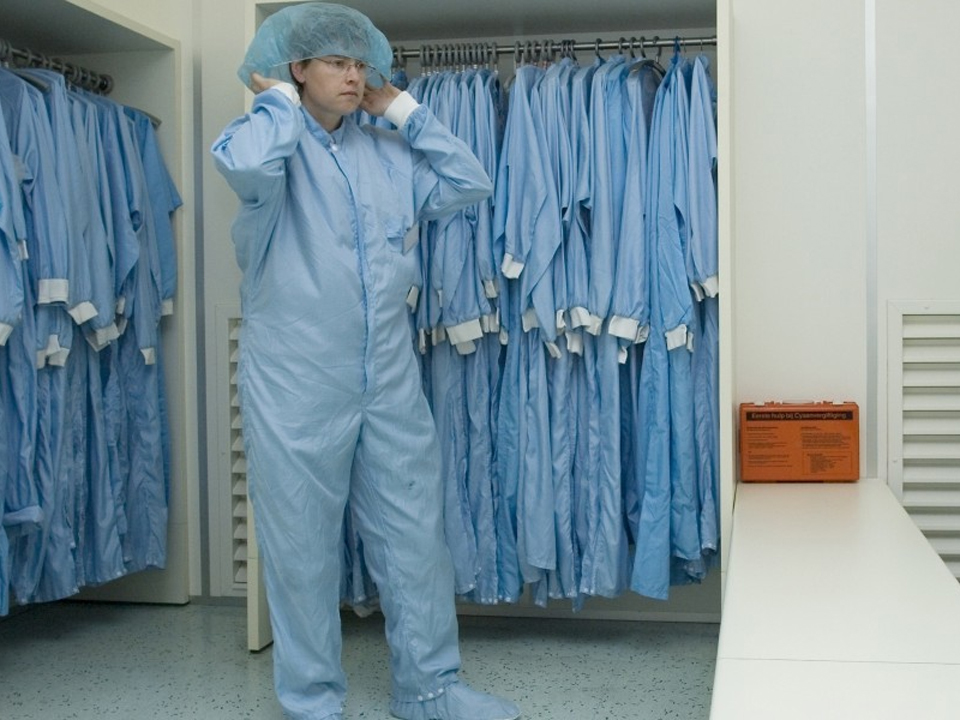
An illustrative example (hypothetical, not a customer case): two rooms are both ISO 8. Room A case-packs sealed cartons. In Room B, operators open containers and weigh powders. Room A may be adequately served by hair cover, a lab coat or coverall, and shoe covers. Room B justifies a hooded coverall with elasticated cuffs and ankles, a mask, and gloves. Same class, different risk, different specification.
A Process-Risk Framework for ISO 7 and ISO 8 PPE
The tiers below are a planning aid, not a standard. Your quality team’s contamination control strategy has the final say.
Risk tier
Typical context (illustrative)
Garment configuration to consider
Verify with the supplier
Tier 1: Lower
ISO 8, product enclosed or non-critical stages; escorted visitors; support-area maintenance
Hair cover, lab coat or coverall, shoe covers
Closure and cuff style, fabric type, packing format
Tier 2: Moderate
ISO 8 with open handling; ISO 7 where product stays enclosed
Hooded coverall with elastic cuffs and ankles, shoe or boot covers, mask and gloves per procedure
Seam finish, zipper coverage, hood fit, size range, shedding test data
Tier 3: Elevated
ISO 7 with open product or steps adjacent to critical zones (for example, Annex 1 Grade C solution preparation)
Hood plus one- or two-piece suit gathered at wrists, high neck, boots or overshoes, mask, gloves
Shedding and retention results on the exact construction, lot traceability, packaging, change-out frequency
Above Tier 3
ISO 5 and Grade A/B aseptic zones
Sterile full gowning
Outside the scope of general-purpose disposable garments
Annex 1 lists “preparation of solutions to be filtered, including sampling and dispensing” as a Grade C activity. That helps illustrate why Tier 3 sits at ISO 7 and why it is not defined by the class number alone.
Reading Garment Specifications
Fabric: gsm is not a cleanliness rating
Disposable garments commonly use PP (polypropylene) nonwoven, SMS (spunbond–meltblown–spunbond), PP+PE laminates, microporous laminates, or CPE film. They trade off breathability, liquid and particle barrier, particle release, heat load, and cost.
Fabric weight indicates strength and opacity, not cleanliness. Two 50 gsm fabrics can differ in fibre bonding, surface finish, and how they release particles. Ask for shedding data on the finished garment, not just the fabric roll. Annex 1 expects garment qualification to assess both shedding and retention of body-shed particles. Even when you are not under Annex 1, that is a sound basis for supplier requests.
In practice, heavier or non-breathable barrier fabrics raise heat load. Operators then loosen hoods or open collars, which undermines the barrier. This is practitioner reasoning, so test garments with your own operators.
Construction: where particles escape
Cuffs and ankles. Elastic or knitted cuffs close the gap between glove and sleeve. Annex 1’s Grade C description calls for suits gathered at the wrists.
Hood. It should cover hair, beards, and moustaches fully and tuck or seal into the collar.
Neck. A high neck matches Grade C wording. Shawl collars and open fronts do not.
Closures. Zippers with flaps, snaps, and Velcro behave differently. Hook-and-loop closures can release lint, so ask which closure the exact style uses and whether the zipper is covered.
Seams. Ask whether seams are sewn, ultrasonic, or taped. Cut, sewn edges can release fibres.
Features that need a reason
Pockets, flaps, reflective bands, and taped seams each add surface area, joins, or both. Taped seams can be useful as a barrier to protect the wearer, but a cleanroom primarily needs to protect the product from the wearer. Include a feature only when a risk assessment justifies it.
Matching Disposable Garment Formats to Risk Tiers
Below is how the formats in the supplier’s range map to the tiers. This is a fit assessment based on their listed constructions. It is not a claim of cleanroom certification.
Formats that can fit Tier 1 to Tier 3, subject to testing
For Tier 1 and some Tier 2 work, disposable lab coats in PP, SMS or microporous fabric offer knee-length coverage. They come with single, double, or knitted collars, optional hoods, and Velcro, snap, or zipper fronts. Choose knitted cuffs and a closure you have validated for lint.
For Tier 2, disposable hooded coveralls with zipper are the closest listed match. The listing shows options for attached boots, a zipper flap, and elastic waist, cuffs, and ankles. Those details decide whether the build approaches a Tier 3 specification.
Where a site prefers separates, the Annex 1 reference to two-piece trouser suits keeps that option open. Two-piece hooded workwear sets offer an elastic hood and cuffs plus selectable waist and ankle finishes. Confirm the neck closure and overlap between jacket and trousers.
Disposable PP/SMS scrub suits fit where a site procedure calls for a dedicated under-layer or entry apparel. They are a base layer, not the outer cleanroom garment.
Formats that usually fit poorly
A disposable CPE isolation gown has an open back and waist ties. That differs from the gathered-wrist, high-neck suit Annex 1 describes for Grade C. A film gown may suit a wet-process apron role in a support area, where heat and breathability are acceptable.
The disposable nonwoven kimono gown has a wrap front, shawl collar, and open cuffs. Its listing positions it for spa, salon, and hygiene programmes, so it is a poor match for controlled-environment gowning.
Hooded protective coveralls with blue taped seams are built for wearer protection, and the listing references EN 14126 for infective agents. Taped seams are not a cleanroom requirement, so confirm that documentation covers the exact ordered construction.
Reflective tape coveralls with hood are for visibility in industrial settings. In a cleanroom, reflective bands add surface that needs a reason. They fit logistics or maintenance staff in outer zones, not gowned process staff.
Cost Drivers, and When More Gown Is Not Safer
A higher-specification garment lowers risk only when it addresses the actual exposure. In a Tier 1 environment, a heavy laminated suit with attached boots can add cost, heat load, and donning time without changing the outcome. Operators who find the garment uncomfortable are more likely to gown incorrectly. The better investment may be training and change-room layout.
The reverse also holds. Under-specifying Tier 3 work to save unit price risks product loss that dwarfs the saving. Lowest unit price is not lowest total cost.
Typical cost drivers include:
Fabric type and weight.
Configuration complexity, such as attached boots, flaps, extra elastic, pockets, and hood style.
Size range and colour coding.
Packaging format, such as individual bag versus bulk pack.
Documentation and test requirements.
Order volume. MOQ and lead time are supplier-specific, so request them in writing.
Nonwoven garments are bulky, so carton density affects freight per garment as well.
What Should Buyers Specify Before Requesting a Quote?
A precise RFQ avoids quotes for the wrong garment. Prepare these items:
Cleanliness class and state. State the ISO class and whether it applies at rest or in operation, plus any sector regime (for example, Annex 1 grade).
Process description. Say whether product is open or enclosed and what activities occur.
Risk tier. Use your own assessment, or the framework above.
Garment configuration. Specify format, hood, boots, collar, cuffs, ankles, closure, pockets, and seam type.
Fabric. Name the material and gsm range, and state whether barrier or breathability matters more.
Sizes and colours. Give the size range and any zone colour coding.
Documentation. List the shedding or particle test data, lot traceability, and certificates you require, and request them for the exact construction.
Packaging. Say whether you need individual bagging and what carton or pallet format suits your gowning-room logistics.
Volumes and schedule. Give monthly consumption, change-out frequency, and delivery timing.
Samples. Plan a wearer trial and any particle testing before committing to bulk volumes.
Frequently Asked Questions
What PPE is required for ISO Class 7 versus ISO Class 8?
ISO 14644-1 does not prescribe garments. Sites define them by risk. For reference, Annex 1 Grade C calls for covered hair, a gathered-wrist, high-neck suit, and shoes or overshoes. Grade D calls for covered hair, a general protective suit, and shoes or overshoes.
Is ISO Class 7 the same as Grade C?
Not exactly. Annex 1 sets Grade C at 352,000 particles/m³ (≥0.5 µm) at rest and 3,520,000 in operation. Those figures match ISO 7 and ISO 8 limits respectively, so Grade C is classified in two states.
Can disposable coveralls be used in ISO Class 7?
Standards do not ban disposables. What matters is shedding and retention performance, fit, and your site’s qualification. Annex 1 expects garment qualification to assess both. Request test data for the exact construction before buying in bulk.
Do ISO Class 8 areas need coveralls?
Not always. Annex 1 Grade D calls for a general protective suit. Whether a lab coat or coverall suffices depends on product exposure, movement, and your contamination control strategy. Open handling favours a hooded coverall.
Does higher gsm mean a cleaner garment?
No. Fabric weight indicates strength and opacity, not particle release. Two fabrics at the same gsm can shed differently depending on fibre bonding and finishing. Ask for shedding data on finished garments.
Should the coverall have attached boots?
Attached boots reduce the gap at the ankle, but they limit sizing flexibility and may not suit slip or comfort needs. Decide by process risk and trial. Some sites prefer separate boot or shoe covers with elastic ankles.
What documents should I request from a supplier?
Ask for particle-shedding or related test results on the exact style, fabric and construction details, lot traceability, and any certificates relevant to your sector. Do not rely on product-page claims alone.