Tell us what products you need, your target market, estimated quantities, required specifications, packaging requirements, and any documentation your company requires.
Still Looking for a Reliable Disposable PPE Supplier?
Tell us what disposable PPE you need, including specifications, quantity, target market, and OEM needs. We’ll review it and recommend suitable options.
Contact Our Team
Tell us what products you need, your target market, estimated quantities, required specifications, packaging requirements, and any documentation your company requires.
Have a PPE Product Requirement ? Talk to Our Specialists
Get practical guidance on disposable PPE specifications, materials, sizing, packaging, private labeling, documentation, and bulk production requirements.
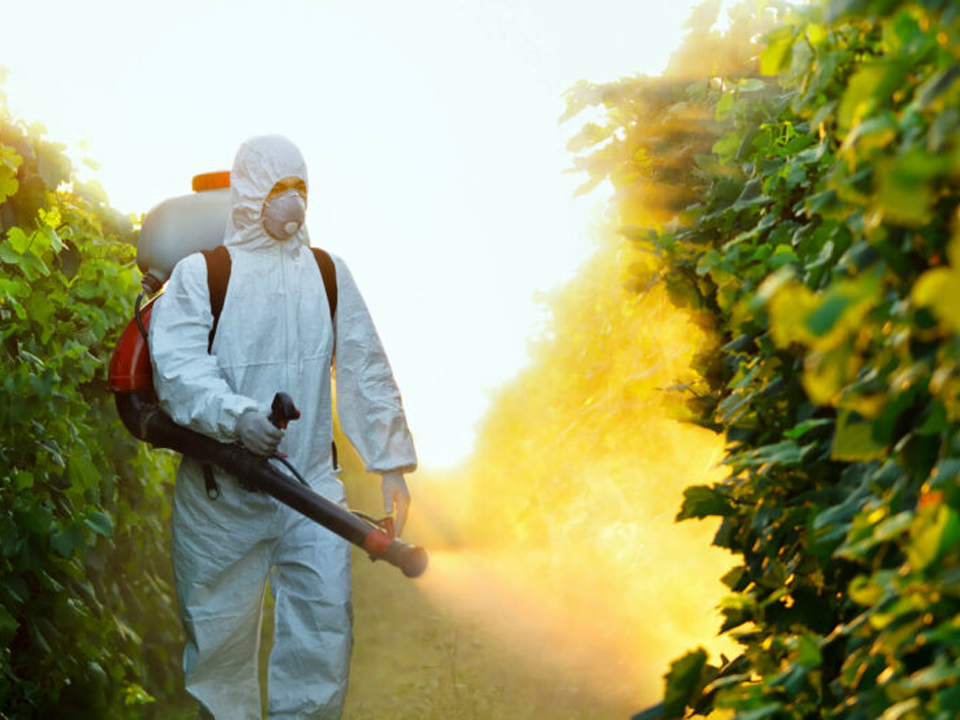
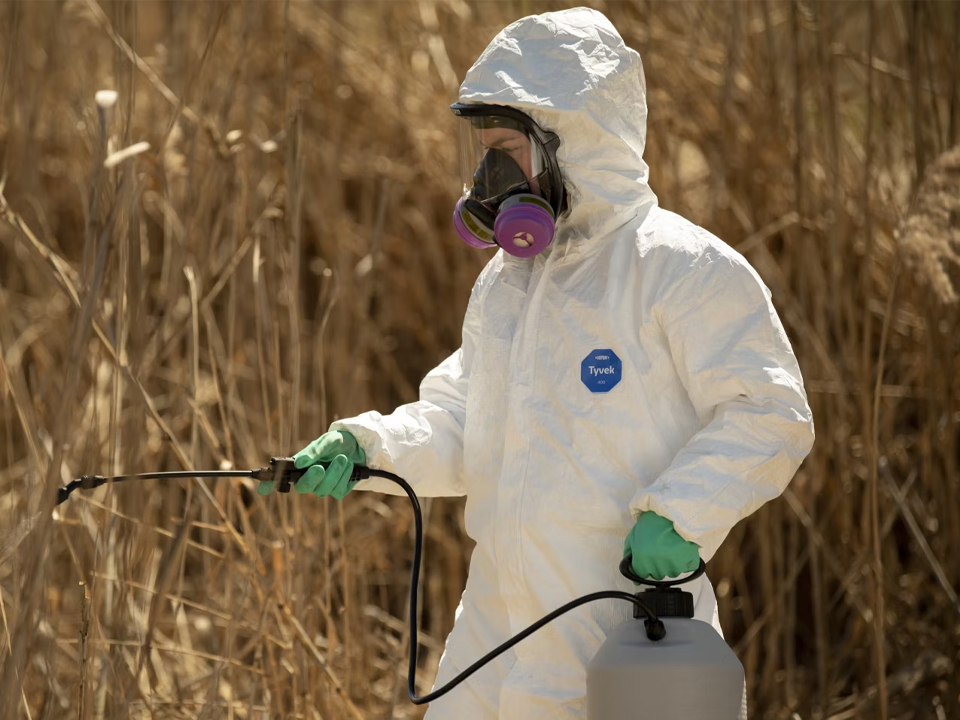
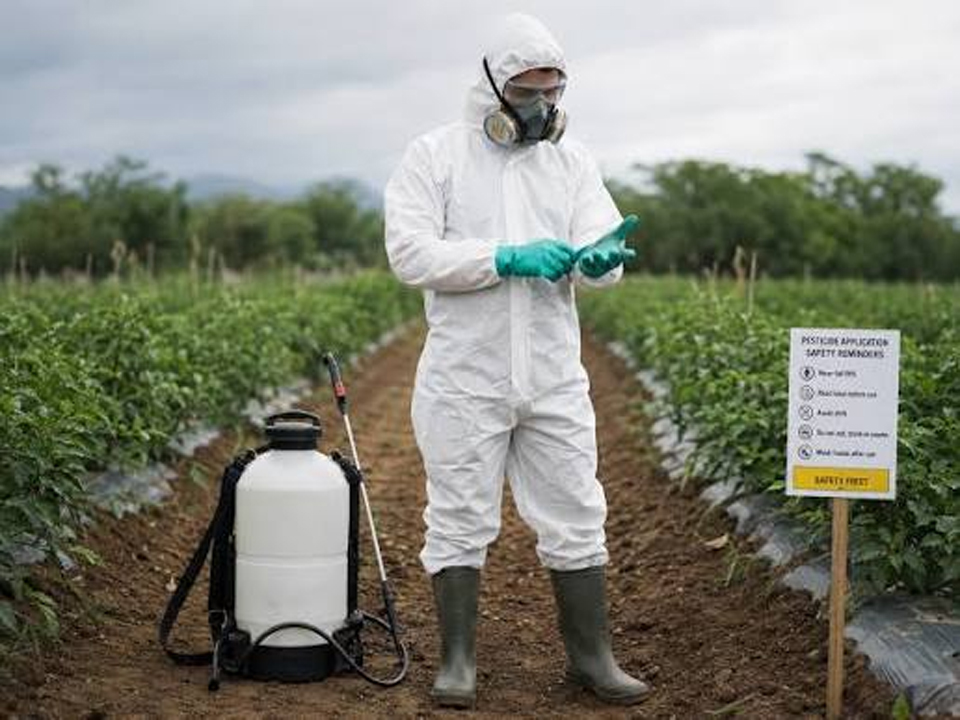
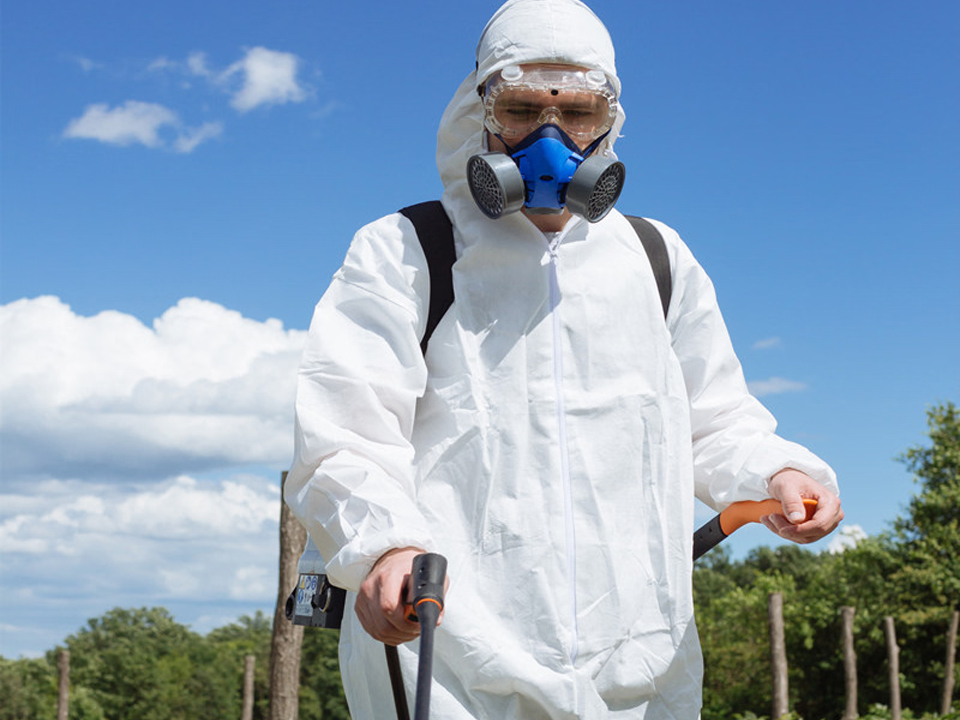
A coverall that looks protective is not the same as one that is approved for the pesticide in the tank. For agricultural buyers, the right garment depends on three things: what the pesticide label requires, how the product is handled (mixing concentrate, spraying, re-entry scouting or equipment cleaning), and how long workers must wear the garment in the heat. Buying a lightweight nonwoven coverall for a task that calls for a chemical-resistant suit exposes workers. Buying the heaviest laminated suit for every task raises heat stress and cost with no added benefit. This guide explains how procurement managers, distributors and farm-supply buyers can match coverall construction to the job, and what to specify before requesting a quote.
What Do Pesticide Labels Require: Coveralls or a Chemical-Resistant Suit?
The pesticide label decides. Under the U.S. Worker Protection Standard, the handler PPE rules in 40 CFR 170.240 apply whenever a pesticide label specifies personal protective equipment. Buyers cannot choose a garment by price or by fabric name alone.
Three distinctions matter in practice:
“Coveralls” and “chemical-resistant suit” are different label terms. According to the Pesticide Educational Resources Collaborative’s summary of the PPE definitions, coveralls are loose-fitting one- or two-piece garments covering the body except the head, hands and feet. When a label requires coveralls, that summary notes they need not be chemical-resistant. If full-body chemical-resistant protection is required, the label specifies a chemical-resistant suit.
“Chemical-resistant” has a strict meaning. The eCFR text states that when the label specifies chemical-resistant PPE, the material must allow no measurable movement of the pesticide being used through it during use. A fabric is therefore chemical-resistant only relative to a specific pesticide and exposure, not as a general property.
A suit can substitute for coveralls, but not the reverse. The same section permits a chemical-resistant suit in place of labeled “coveralls” and waives any requirement for an additional clothing layer beneath.
The practical consequence: a basic polypropylene (PP) or SMS coverall may satisfy a label that asks for coveralls, but should not be offered for tasks where the label requires a chemical-resistant suit. Buyers outside the United States should check their national regulator’s PPE rules and the product label for their market. Regulations and label wording vary by jurisdiction, so confirm with a qualified occupational safety adviser.
Which Coverall Protection Level Fits Which Pesticide Task?
Suppliers commonly describe chemical protective coveralls by European “Type” classifications. Type 3 refers to liquid-tight garments, Type 4 to spray-tight garments, Type 5 to protection against airborne solid particles, and Type 6 to limited splash protection. Many garments are certified to several types at once. These are general descriptions from the EN standards family, and a buyer should always request the certificate and test report instead of relying on a type icon on a carton.
For pesticide work there is also a dedicated standard. The BSI listing for BS EN ISO 27065:2017+A1:2019 states that it sets minimum performance, classification and marking requirements for protective clothing worn by operators handling pesticides and by re-entry workers. It applies to pesticides applied in liquid form and excludes biocidal products. A garment tested to a general chemical standard is not automatically tested to ISO 27065, so ask which one the supplier means.
The table below is a qualitative selection guide, not a specification. It does not replace the label or supplier test data.
Limited liquid barrier; not a chemical-resistant suit unless tested for the pesticide
SMS nonwoven coverall
Finer particle filtration from the meltblown layer; some splash resistance
Re-entry work, dust, light splash exposure where the label allows coveralls
Liquid hold-out depends on the formulation; may not stand up to concentrates or sustained spray
Microporous film laminate
Stronger barrier to liquids and fine particles than uncoated nonwovens (general trend)
Spraying and loading where the label or risk assessment calls for a higher barrier
Lower breathability than SMS; seam and zipper design become critical
Coated or laminated suit tested to spray-tight or liquid-tight types
Barrier to sprays or liquid chemicals, as certified
Mixing and loading concentrates; label-required chemical-resistant suit
Highest heat load; often needs shorter work cycles and cooling breaks
How to Choose Coverall Material for Agricultural Chemicals
Fabric choice is a trade-off between barrier and breathability, and the right point on that scale depends on the formulation and the task.
Barrier performance depends on the pesticide, not just the fabric
An emulsifiable concentrate, a water-based suspension and a dry powder challenge a garment differently. Solvents and surfactants in formulations can change how quickly liquid wets out or penetrates a fabric. Ask suppliers for test data on the chemicals or classes that match your products, and be cautious about generic claims such as “chemical resistant” without a named test method and chemical list.
Why a heavier barrier is not automatically safer
It is tempting to specify the most impermeable suit available. That can backfire. The eCFR requires that, when PPE is specified by the label, handlers must not be directed to do the job unless appropriate measures are taken, if necessary, to prevent heat-related illness. A garment that traps heat can lead workers to unzip, roll up sleeves or skip PPE altogether, which defeats its purpose.
A defensible approach is to specify by task:
Use the higher-barrier suit where the label requires it or where exposure to concentrate is likely.
Use a breathable SMS-type coverall for lower-exposure work where the label permits coveralls.
Plan work-rest cycles, shade and hydration for any impermeable garment, particularly in warm climates.
This is not a case for choosing the lighter garment by default. When the label requires a chemical-resistant suit, no comfort argument changes that requirement.
Construction Details That Cause Problems in the Field
Two coveralls cut from the same fabric can perform very differently. Check these features with samples before committing to volume:
Seams. Serged seams are common on lighter-duty garments, while taped or bound seams are used where a higher liquid barrier is claimed. Ask how the seam is finished and whether the test report covers the seam, since seams are a common weak point.
Zipper and storm flap. An uncovered zipper offers a path for liquid. A storm flap with adhesive closure helps, but check that it stays closed during bending and reaching.
Hood, cuffs and ankles. Elastic at the face, wrists and ankles reduces gaps. Thumb loops can keep sleeves from riding up but may interfere with glove placement. The label will state how sleeves and gloves should be worn relative to each other, so confirm the design allows that.
Sizing and cut. A coverall that is too tight splits at the crotch and shoulders, and one that is too loose snags on equipment. Check actual garment dimensions against the worker population, including taller workers and workers wearing layers or harness gear.
Fabric durability. Orchard branches, trellis wire and equipment edges tear lightweight nonwovens. Abrasion and tear performance are separate from chemical barrier ratings.
Disposable or Reusable Coveralls for Pesticide Work?
Disposable coveralls remove the laundering step, but they do not remove regulatory obligations. The eCFR sets out several handler-employer duties that affect this choice:
PPE must be inspected before each day of use, and damaged items repaired or discarded.
Reused PPE must be cleaned according to the manufacturer’s or the label’s instructions before each day of reuse, and PPE that cannot be cleaned properly must be disposed of under applicable federal, state and local regulations.
Contaminated PPE must be kept and washed separately from other laundry, and handlers must not wear or take home contaminated PPE.
Disposable garments suit high-turnover work, contractors with irregular crews, and exposures where cleaning cannot be verified. Reusable garments can make sense for repeated, lower-exposure tasks if the cleaning method is defined and followed. Whichever route you choose, disposal waste handling and local rules for contaminated PPE still need a plan.
Do not overlook the clean change of clothes
The EPA’s decontamination supply requirements under the Worker Protection Standard require employers to provide handlers with a clean change of clothes, such as one-size-fits-all coveralls, for use if their garments become contaminated and must be removed immediately. These supplies must be in closed containers and not more than a quarter mile from handlers during the handling activity. This creates a separate, steady demand for low-cost, one-size coveralls that distributors can stock independently of the chemical protective range. These emergency garments are not the same as the labeled PPE worn during spraying.
Where Sleeve Covers Fit, and Where They Do Not
Sleeve covers are sometimes suggested as a low-cost add-on for forearm protection. They do not replace a coverall or chemical-resistant suit where a label requires one. They are better treated as a supplementary layer for lower-exposure tasks, such as handling dry inputs, sorting or equipment servicing, or as a sacrificial cover over a primary garment.
If your customers need that kind of accessory, disposable PP sleeve covers are listed by the manufacturer in PP, SMS, PP+PE, SMS+CPE/PE and microporous options at 20–65 gsm, with elastic or knitted cuffs. The product page positions them for hospitals, cleanrooms, laboratories, food workplaces and restaurants rather than for pesticide use, so a buyer should confirm suitability for any agricultural chemical exposure before using them.
What Drives the Cost of Agricultural Chemical Coveralls?
Unit price is a poor measure of what a coverall costs. A more useful comparison is the cost per usable work shift, including rejects and replacements.
Material and barrier level. Coated or laminated constructions cost more than PP or SMS, and certification testing adds cost to certified styles.
Construction. Taped seams, storm flaps and elastic details add labor and materials.
Durability. A cheaper garment that tears during a shift gets replaced mid-shift, which can cost more than a stronger one.
Sizing waste. Wrong-size garments get discarded unused. A balanced size curve matters when buying for mixed crews.
Packaging and freight. Bulk carton size, compression and unit packing change landed cost, especially for bulky garments.
Heat impact. Lost productivity from heat-related breaks is an indirect cost that rarely appears in a quote but affects the real price of an impermeable suit.
An illustrative example: a distributor supplying contract sprayers might find that one coverall style cannot serve every role. Mixers and loaders handling concentrates may need a label-specified chemical-resistant suit, while field scouts may only need a breathable coverall. Splitting the order by task reduces both risk and spending. This is a hypothetical scenario, not a customer case.
What Should Buyers Specify Before Requesting a Quote?
A clear request helps suppliers quote the right garment the first time. Include:
Label requirements. State whether target pesticide labels say “coveralls” or “chemical-resistant suit,” and name the products or active ingredient classes involved.
Task and exposure. Describe mixing and loading, boom or airblast spraying, backpack application, re-entry, or cleanup, and whether work is open-field or in a greenhouse.
Required standards or certificates. List the type ratings or standards your market requires, and ask for current certificates and test reports.
Material and construction. Name preferred materials (PP, SMS, microporous or coated), seam type, zipper and storm flap, hood, cuffs and thumb loops.
Sizes and size ratio. Provide the sizes and the expected distribution, including extra-large sizes.
Climate and shift length. Give expected temperatures and wear time so the supplier can advise on breathability.
Quantities and delivery. Share order volume, repeat order forecast, target lead time and destination country.
Branding and packing. Specify private label, color, individual bag, polybag or carton quantity and labeling language.
Sample request. Ask for samples to wear-test with workers and to test fit with gloves, respirators and boots.
Buyers adding accessories to the same shipment can compare the supplier’s PP and SMS sleeve cover options, which are listed with sizes of 40×20, 45×20 and 60×20 cm, custom dimensions, and packing of 100 pieces per bag and 1,000 pieces per carton. Pack and size details should be verified with the supplier at quotation stage.
What Should You Verify Before Selecting a Supplier?
Test evidence. Can the supplier provide third-party test reports that match the garment you are buying, covering seams and fabric, and are the reports current?
Batch consistency. Ask how the factory checks seam strength, zipper function and fabric weight from batch to batch.
Claims discipline. Be wary of suppliers who label every garment “chemical resistant” without naming the test method or chemicals.
Sample-to-bulk match. Compare bulk production against the approved sample for fabric weight, seam finish and sizing.
Packaging. Check that cartons protect garments from crushing and moisture, and that labels carry the correct size and standard information.
Customization limits. Ask what can be changed (color, logo, packing) without retesting or recertifying the garment.
Documentation for your market. Confirm what paperwork supports import, resale or end-user compliance in your destination country.
No claim about a manufacturer’s capacity, MOQ or certification should be accepted without documents.
Frequently Asked Questions
Are disposable coveralls acceptable for pesticide application?
They can be, if the garment meets what the pesticide label requires. A label calling for coveralls is a different requirement from one calling for a chemical-resistant suit. Check the label and the exact garment’s test data before choosing.
What is the difference between Type 4, Type 5 and Type 6 coveralls?
Type 4 is generally described as spray-tight, Type 5 as protection against airborne solid particles, and Type 6 as limited splash protection. Many coveralls carry multiple ratings. Confirm the certificate and the chemicals tested, because a type rating does not cover every pesticide.
Is an SMS coverall chemical-resistant?
Not by default. SMS adds a fine meltblown filtration layer and some liquid resistance, but chemical-resistant PPE must allow no measurable movement of the specific pesticide through the material during use. Check test data for the formulation involved.
Does ISO 27065 apply to all agricultural chemical coveralls?
No. According to its BSI listing, ISO 27065 covers protective clothing for operators applying pesticides in liquid form and for re-entry workers, and it excludes biocidal products. Suppliers should state whether a garment was tested to it.
Should workers wear one coverall for the entire spray season?
Only if the label and manufacturer’s cleaning instructions allow reuse. Handler employers must inspect PPE before each day’s use, clean it before reuse, dispose of PPE that cannot be cleaned, and never allow contaminated PPE to go home.
What sizes should I order for mixed agricultural crews?
Order a size spread based on actual worker measurements instead of an even split, and include larger sizes. Test samples while wearing gloves, boots and any respirator. A garment that is too tight splits seams or restricts movement.
What should a distributor stock for emergency decontamination?
Stock simple one-size-fits-all clean coveralls in sealed packs. EPA’s WPS supply requirements call for a clean change of clothes for handlers, kept in closed containers near handling areas. These are separate from labeled spray PPE.