Tell us what products you need, your target market, estimated quantities, required specifications, packaging requirements, and any documentation your company requires.
Still Looking for a Reliable Disposable PPE Supplier?
Tell us what disposable PPE you need, including specifications, quantity, target market, and OEM needs. We’ll review it and recommend suitable options.
Contact Our Team
Tell us what products you need, your target market, estimated quantities, required specifications, packaging requirements, and any documentation your company requires.
Have a PPE Product Requirement ? Talk to Our Specialists
Get practical guidance on disposable PPE specifications, materials, sizing, packaging, private labeling, documentation, and bulk production requirements.
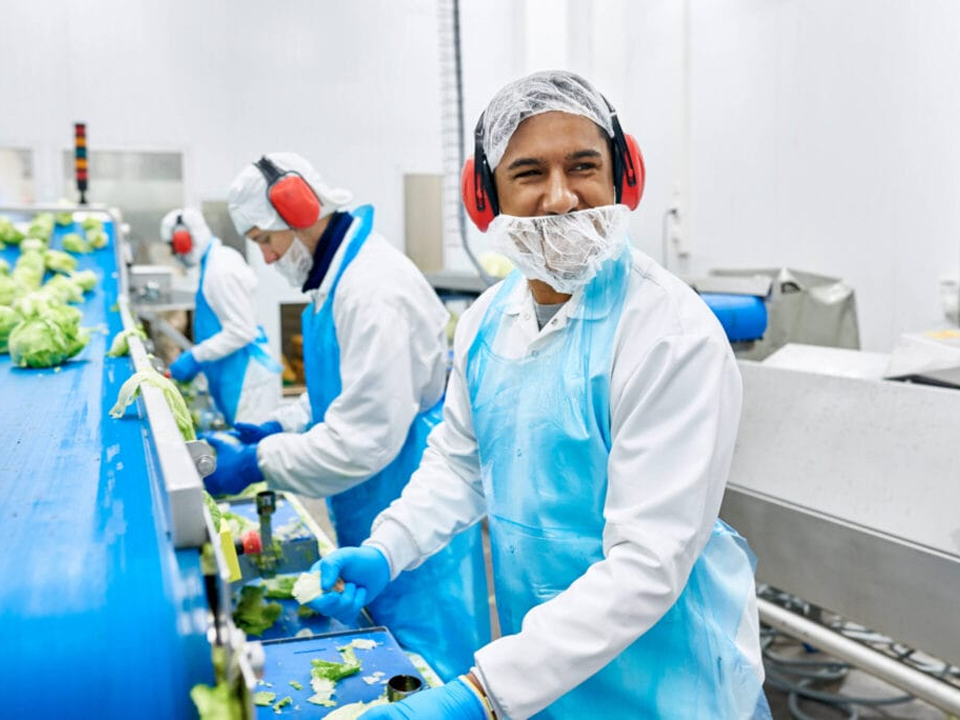
A HACCP PPE checklist lists the protective clothing and accessories that keep workers from becoming a source of microbial, allergen, or physical contamination, together with the rules for when, where, and how each item is used. A missing item is only one way PPE programs fail. An item can also be worn incorrectly, specified for the wrong zone, or never verified. This checklist is written for QA managers, plant managers, and purchasing teams who need to turn a hygiene policy into specific, auditable, buyable PPE requirements. It covers where PPE sits in a HACCP system, what to include by body area and production zone, how to specify disposable headwear, and what to prepare before requesting a quote.
Where Does PPE Fit in a HACCP Plan?
In most plants, PPE is managed as a prerequisite program (good hygiene or good manufacturing practice) rather than as a critical control point (CCP). Your HACCP team makes the final call through its hazard analysis, but the distinction changes how you write the checklist.
The Codex Alimentarius General Principles of Food Hygiene state that properly applied prerequisite programs, including good hygiene practices, should provide the foundation for an effective HACCP system. In the United States, 21 CFR 117.10 requires management to take reasonable measures so that people working in direct contact with food, food-contact surfaces, and packaging follow hygienic practices. Its listed methods include suitable outer garments, intact and sanitary gloves, and, where appropriate, hair nets, headbands, caps, beard covers, or other effective hair restraints. Other markets, customers, and certification schemes may add requirements, so treat the regulation as a baseline rather than a complete specification.
Because PPE usually sits in the prerequisite layer, each checklist item should answer four questions:
Which hazard does it control (hair or fiber, allergen cross-contact, microbial transfer, metal or hard foreign material)?
In which zones is it mandatory?
Who verifies it, and how often?
What happens when a check fails?
An item that cannot answer these questions is a habit, not a control.
A qualification worth making: more PPE is not automatically safer. Extra layers can slow donning, trap heat, and tempt workers to pull coverings down or leave them off. A well-chosen single item that people wear correctly all shift usually does more for the product than a heavier set that gets adjusted, removed, or dropped. The right level depends on product risk, process temperature, and how exposed the product is.
The HACCP PPE Checklist by Body Area
Use the lists below as a starting template. Remove or tighten items according to your hazard analysis, customer requirements, and local regulations.
Head, Hair, and Beard
[ ] All head hair is fully enclosed, including sideburns, nape, and fringe.
[ ] Beards and moustaches are covered where facial hair is present.
[ ] Headwear is put on in the designated changing area, before the outer garment.
[ ] Sizes in stock cover the full range of wearers, including long hair and tied-up styles.
[ ] Single-use headwear is discarded at defined points, such as breaks and zone exits.
[ ] Detectable headwear is used where the foreign-material program calls for it.
Headwear is where specification choices matter most, because each style covers a different area and fails in a different way. The table compares the styles that appear in supplier ranges. Fabric weights are the ranges listed on the supplier product pages linked in this article. Confirm actual specifications with your supplier before ordering.
Style
Coverage
Fit mechanism
Listed fabric weight
Best suited to
Main watch-out
Clip cap
Crown and hair
Single or double elastic
10–15 gsm
Short to medium hair, high-volume daily use
Sides and nape may be exposed if undersized
Bouffant cap
Crown and hair, with extra volume
Gathered elastic opening
10–35 gsm
Longer or thicker hair
Loose elastic or oversize can slip over the eyes
Detectable clip cap
Crown and hair
Elastic opening, aluminum strips
10–15 gsm
Zones with metal detection
Detection performance must be validated on your equipment
Doctor cap (elastic back)
Crown, tied-up hair
Elastic back
20–35 gsm
Fast donning, mixed-length hair
Fit depends on elastic tension
Doctor cap (ties)
Crown, tied-up hair
Back ties
20–35 gsm
Adjustable fit
Loose tie ends if knotted poorly
Balaclava cap
Head, neck, beard area; eyes open
Elastic neck
15–35 gsm
Bearded staff, visitor programs
Warmth in hot rooms
Astronaut cap with ties
Hood with open face
Two neck ties
16–25 gsm
Controlled zones needing neck and hair coverage
Donning time, tie management
Astronaut cap with face mask
Head, neck, and face
Elastic neck
15–35 gsm
Single-item head and face coverage
Heat, communication, mask fit
How the styles differ in practice
PP nonwoven clip caps arrive as a compact pleated strip that expands over the hair. The product page lists 18, 19, 21, and 24 inch sizes and single or double elastic. They suit routine hair containment where cost per wearer and storage volume matter.
PP nonwoven bouffant caps use a round, gathered body that holds more volume, which helps with longer hair. The listed 10–35 gsm range gives buyers a choice between lighter, cooler fabric and a more durable one, but a wide range also means you must state the weight you want in your specification instead of ordering by style name alone.
Doctor caps with an elastic back and doctor caps with back ties are offered in PP nonwoven or SMS at 20–35 gsm, in a 60 × 13 cm format. Elastic-back versions are quicker to put on. Tie-back versions let the wearer adjust fit around tied-up hair, but only if the ties are secured and the ends do not hang free.
Staff with beards are a common gap in hair-restraint programs, because a head cap alone leaves facial hair exposed. Disposable PP balaclava caps enclose the head, neck, and beard area while leaving the eyes open, which can replace a two-item combination with one item. Check that the 36 × 40 cm listed size fits your widest wearers.
Where hood-style coverage is wanted, astronaut caps with ties cover the head and neck with an open face and are listed in 36 × 38, 38 × 40, and 40 × 42 cm sizes. Astronaut caps with an attached face mask combine the hood and a face covering in one item, in 35 × 35 or 40 × 35 cm. Single-item designs reduce the chance that one component is forgotten, but trial them in your warmest room before standardizing, since heat and muffled speech affect compliance.
Face and Mouth
[ ] The face covering policy states which zones require one and why.
[ ] Masks cover nose and mouth, with no gap at the nose bridge or chin.
[ ] Masks are replaced after breaks, when damp, or when handled.
[ ] Masks are never pulled below the nose or worn on the chin.
21 CFR 117.10 does not name face masks. Whether to require them is a facility decision, usually driven by product exposure, customer requirements, or a certification scheme. Where they are required, the specification should match the purpose. A lightweight hygiene mask such as a disposable paper ear-loop face mask, listed as 13–14 gsm wood pulp paper in 1-ply or 2-ply, is positioned for routine hygiene use. It is not a respirator. If a task also exposes workers to dust, such as flour handling or spice grinding, that is a worker-protection decision under occupational safety rules and needs a separately specified respirator.
Body, Sleeves, and Aprons
[ ] Outer garments cover street clothing and are fully closed.
[ ] Garments suit the operation, including allergen cross-contact controls.
[ ] Many facilities remove exterior pockets above the waist in high-risk zones. This is a common practice, not a regulatory requirement.
[ ] Sleeve covers or aprons are changed when soiled and removed before leaving the zone.
[ ] Reusable garments follow a defined laundering cycle and disposable ones a defined discard rule.
Hands and Gloves
[ ] Hands are washed before gloving and after any absence from the workstation, as 21 CFR 117.10 requires for hand washing.
[ ] Gloves are kept intact, clean, and sanitary while used in food handling.
[ ] Glove change triggers are written down: tear, soiling, task change, allergen changeover, and break.
[ ] Glove material is matched to the task, with chemical-resistant gloves for sanitation and cut-resistant liners for knife work.
Footwear, Tools, and Personal Items
[ ] Footwear or overshoes are dedicated to the zone where the hygiene level requires it.
[ ] Unsecured jewelry and loose objects that could fall into food, equipment, or containers are removed.
[ ] Personal belongings are stored away from exposed food and equipment-washing areas.
[ ] Pens, markers, and small tools are detectable and issued, logged, and returned.
Matching PPE to Zone Risk
A single plant-wide rule is easy to train but wastes money in low-risk areas and may under-protect high-risk ones. Zone-based requirements keep the checklist proportionate. The table is an illustrative starting point. Your hazard analysis, product risk, and customer audit requirements decide the final version.
Zone
Typical PPE focus
Headwear options to consider
Receiving and warehouse
Basic hair control if packaging is opened; garments if entering clean areas
Clip caps or bouffant caps
Raw preparation
Full hair containment, beard cover, garments, gloves
Bouffant caps, doctor caps, balaclavas for beards
Cooking and thermal processing
Hair control with heat tolerance in mind
Lighter-weight caps; avoid heavy hoods
Post-cook, packing, ready-to-eat
Highest hair, beard, and garment control; dedicated footwear
Sealed kits with hair, beard, garment, and footwear items
Clip caps, balaclavas
Should Detectable Items Be on Your PPE Checklist?
Detectable items belong on the checklist where your foreign-material program relies on metal detection to find hard contaminants. A published review of foreign-material detection and prevention in food06782-8) summarizes the FDA position that a hard or sharp foreign object of 7 to 25 mm in a ready-to-eat product can be treated as a significant hazard. Metal fragments from tools, fasteners, and accessories are an obvious source, and so is any loose component of PPE itself.
Detectable is not the same as detected. The supplier’s product page describes the aluminum strips as a detectable feature but does not publish detection-sensitivity data. Validate performance on your own detector, product, and line speed.
Containment comes first. A detectable cap that falls into a product stream is a recovery tool, not an excuse for poor fit. Correct sizing and worn-correctly checks prevent the event.
Not every line needs it. If your hazard analysis shows no detection step, or the cap never travels over exposed product, a standard cap may meet the requirement at lower cost.
Ask each supplier which detection equipment the item has been tested against, and ask for supporting records rather than relying on the word “detectable” in a product name.
How to Specify Disposable Headwear and Face Coverings
Vague specifications produce inconsistent deliveries. These are the variables that affect fit, comfort, compliance, and cost, along with what to verify.
Material. PP nonwoven is the common base for caps. SMS (spunbond-meltblown-spunbond) laminates are offered on some doctor and astronaut styles. Confirm which one you are specifying, because the two behave differently in tear resistance and feel.
Fabric weight (gsm). Lighter fabric is generally cooler and cheaper, and heavier fabric is generally more tear-resistant. Where a supplier lists a wide range, name the exact value in the RFQ and approve a sample.
Size and cut. Order sizes that match your workforce. An undersized cap that leaves the nape or sideburns exposed fails the purpose even if it is on the head.
Closure. Single or double elastic, back elastic, ties, or neck elastic each have a different failure mode: loose, tight, unsecured, or slow to put on. Pick the one your staff will use correctly.
Color. Many facilities choose colors that contrast with their product so a dropped item is easier to spot, and others use color to mark zones or roles. The product pages list several color options, so confirm your coding scheme before ordering.
Packing format. Listings show 100 pieces per bag, with carton sizes that vary by style. Smaller inner bags help control issue points and reduce handling at zone entrances. Printed inner bags and cartons are listed as available for some styles, which can support lot identification.
Documentation. Requirements vary by market and customer. Ask what material declarations or test records the supplier can provide, and do not assume that a style is approved for your market from its name.
Common PPE Failures in Food Plants
Partial coverage. Hair is covered at the crown but exposed at the nape or sides, or a beard cover protects the chin but not the moustache.
Wrong sequence. Caps are put on after garments, so loose hair falls onto the clean outer layer.
Zone leakage. Gloves, sleeves, or aprons worn in a raw area are carried into a ready-to-eat area.
Fit mismatch. Only one or two sizes are stocked, so staff improvise.
Worn incorrectly. Masks sit below the nose, or tie ends hang free.
No stock at the point of use. When entry stations run out, people reuse items or skip them.
Unverified assumptions. A cap is called detectable but has never been tested on the line detector.
Most of these are verified through simple checks. A pre-shift check at the entry point and a periodic in-process walk, with records and defined corrective actions, will catch more problems than a longer policy document. Treat a missing cap or glove on the line as a reportable event that triggers a line check, not as a minor housekeeping issue.
What Should Buyers Specify Before Requesting a Quote?
A precise RFQ avoids sample cycles caused by missing details. Prepare the following:
Product style and use zone, for example bouffant cap for raw preparation or balaclava for staff with beards.
Material and fabric weight: PP nonwoven or SMS, with a target gsm.
Size range and quantities per size, based on your workforce.
Closure type and any fit requirements for long or tied-up hair.
Color and any zone or role coding.
Detectable requirement, with the detector type and any validation records you need.
Annual and per-order quantities, plus delivery schedule and shipping method.
Packing: pieces per inner bag, carton quantity, and any printing on bags or cartons.
Documentation required by your market, customer, or audit scheme.
Samples: the number of pieces you need, so you can run a wear trial in your warmest and most active zones.
Do not assume the supplier’s MOQ, lead time, or certifications. Request them in writing with the quotation. For a pilot, trial one or two styles on a single line before changing the plant-wide standard.
Frequently Asked Questions
Is PPE a critical control point in HACCP?
Usually not. PPE is most often managed under prerequisite programs such as good hygiene or manufacturing practice, which support the HACCP plan. Your HACCP team decides through hazard analysis, and can designate a PPE-related step as a CCP only where the analysis justifies it.
What PPE is required in a food manufacturing facility?
Requirements vary by country, product, and customer. In the United States, 21 CFR 117.10 covers suitable outer garments, intact and sanitary gloves, and hair restraints where appropriate. Customers and certification schemes often add zone-specific rules, so confirm the full set with your QA team.
Should I choose a bouffant cap or a clip cap?
Choose by hair volume, zone risk, and fit. Bouffant caps hold more hair, so they suit longer or thicker hair. Clip caps are compact and economical for routine use. Whichever you choose, check that the nape and sideburns stay covered across all wearers.
Are detectable caps required?
No universal requirement applies to every plant. Detectable items are used where a metal detection step is part of the foreign-material program. Your hazard analysis, customer specifications, and audit scheme decide, and detection performance should be validated on your own equipment.
Do food production staff need face masks?
21 CFR 117.10 does not name face masks. Many plants require them in high-risk or ready-to-eat areas because of product exposure, customer rules, or scheme requirements. Lightweight hygiene masks are not respirators, so dust exposure needs a separate worker-protection decision.
How often should disposable PPE be changed?
There is no single interval. Define change triggers in your procedures: after breaks, when damaged or soiled, when leaving a zone, and at task or allergen changeover. Set the rule by risk, record it, and verify it during in-process checks.
What should a visitor PPE kit include?
At minimum, a hair covering, a beard cover or balaclava for bearded visitors, a clean outer garment, and footwear covers where the zone requires them. Visitors should also follow jewelry and personal-item rules, and kits should be sealed and stocked at each entry point.