

When a carton says “99% filtration,” procurement teams often assume they are looking at a complete performance claim, although the number may describe one test, one material sample, one laboratory condition, and a product configuration that is not necessarily inside the carton.
Trust the number?
I wouldn’t—not by itself. A credible medical mask claim links the percentage to a named test method, standard edition, accredited laboratory, finished-mask model, production configuration, sampling plan, and traceable report. Remove those details and “99%” becomes packaging decoration.
That is the first hard truth about medical mask standards: BFE, PFE, and Delta P answer different questions. None establishes total protection alone. And even a genuine ASTM level does not turn a loose-fitting medical mask into an N95 respirator.

What a Trustworthy Medical Mask Claim Must Contain
A buyer should be able to move backward from the carton to the evidence without encountering a broken chain.
I use a simple rule: if a supplier cannot connect the commercial SKU to a specific laboratory report, the report is not evidence for that SKU. It may be authentic. It may also describe another size, color, factory, filter weight, or product made two years earlier.
A defensible technical file should identify:
- The manufacturer’s legal name and manufacturing address
- The exact model, style, size, color, and layer construction tested
- The applicable standard and edition, such as ASTM F2100-23
- Each underlying method, including ASTM F2101 for BFE
- The laboratory name and ISO/IEC 17025 accreditation scope
- Test dates, report number, specimen count, and individual results
- Lot or production-family traceability
- Fluid resistance, flammability, and biocompatibility evidence
- Labeling that matches the tested ASTM level
- Shelf-life support where an expiration date is claimed
That sounds bureaucratic. It isn’t.
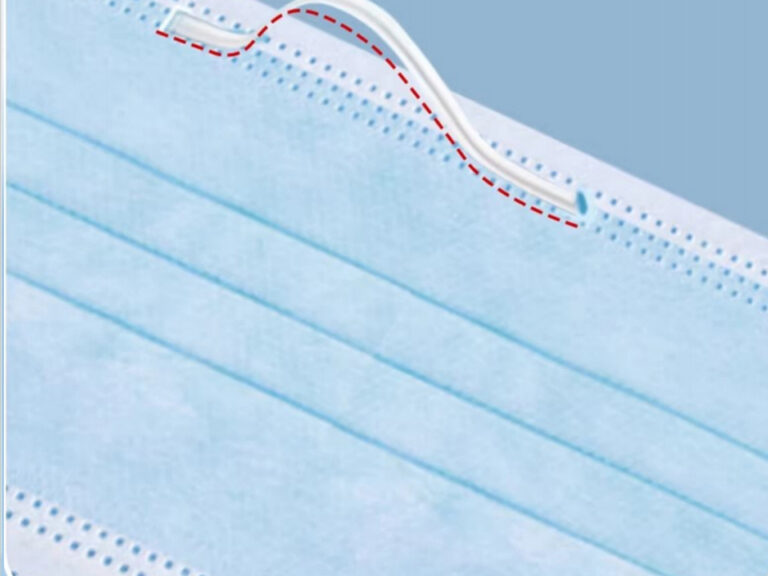
Medical masks typically rely on an electrostatically charged polypropylene melt-blown filtration layer between spunbond polypropylene layers. Time, heat, humidity, unsuitable storage, and production changes can affect performance. A report for a 25 g/m² filter layer does not automatically validate a later 20 g/m² construction merely because both masks look blue and pleated.
ASTM F2100 Mask Levels: The Buyer’s Benchmark Table
The FDA entered ASTM F2100-23 as a completely recognized consensus standard on May 29, 2023, for Class II surgical masks under product code FXX and 21 CFR 878.4040. The standard classifies performance using BFE, PFE, Delta P, synthetic-blood resistance, and flammability.
Here are the ASTM F2100-23 thresholds buyers should place in a specification:
| Performance measure | Level 1 | Level 2 | Level 3 | What the buyer should understand |
|---|---|---|---|---|
| Bacterial filtration efficiency | ≥95% | ≥98% | ≥98% | Filtration against a bacterial aerosol under ASTM F2101 |
| Sub-micron particulate filtration efficiency | ≥80% | ≥85% | ≥85% | Current F2100-23 thresholds using the newer F3502-based method |
| Delta P | <5.0 mm H₂O/cm² | <6.0 mm H₂O/cm² | <6.0 mm H₂O/cm² | Resistance to airflow through the mask material |
| Synthetic-blood resistance | 80 mmHg | 120 mmHg | 160 mmHg | Resistance to fluid penetration at increasing test pressures |
| Flammability | Class 1 | Class 1 | Class 1 | Flame-spread classification under 16 CFR Part 1610 |
| Typical selection logic | Low fluid exposure | Moderate fluid exposure | High fluid exposure | Selection must follow the actual task and facility risk assessment |
A warning belongs beside this table. ASTM F2100-19 used PFE thresholds of ≥95% for Level 1 and ≥98% for Levels 2 and 3 under ASTM F2299. ASTM F2100-23 adopted a more demanding, better-controlled F3502-based particulate method and changed the thresholds to ≥80% and ≥85%.
The percentages are not directly interchangeable.
So an old “98% PFE” result is not automatically better than a new “85% PFE” result. Different aerosol properties, flow conditions, particle treatment, and test controls can produce different numerical outcomes from the same filter media. Comparing the figures without comparing the methods is bad science dressed as purchasing analysis.
ASTM has subsequently issued F2100-26, while the FDA’s FXX classification record updated in August 2026 still identifies F2100-23 as a recognized consensus standard. A purchase order should therefore name the governing edition and regulatory market instead of using the vague phrase “latest ASTM standard.”
BFE Measures Bacteria—Not Every Filtration Risk
Bacterial filtration efficiency measures the percentage of a bacterial aerosol stopped by medical mask material under specified laboratory conditions. ASTM F2101 uses an aerosol containing Staphylococcus aureus, with the challenge commonly associated with droplets averaging approximately 3.0 µm.
That is useful. It is not universal.
A medical mask BFE rating does not establish N95 performance, facial fit, total inward leakage, viral filtration efficiency, fluid resistance, or protection against every aerosol size. It tells us how the tested mask performed against one defined bacterial challenge.
This is where weak suppliers become slippery. They present BFE as though it were a complete protection score because BFE results often look impressive—98%, 99%, even 99.9%. Buyers see the extra decimal place and infer precision. Yet a 99.9% headline can conceal a report that lacks SKU traceability, uses an unaccredited laboratory, or covers only a flat material coupon.
My blunt view: an unsupported 99.9% claim is worth less than a properly documented 98.2%.
Ask for the results from every specimen, not only “PASS.” Request the mean, minimum, maximum, and any failed or excluded sample. A supplier should also explain whether testing covered the complete finished mask and whether all marketed colors, dimensions, and filter weights belong to the validated product family.
PFE Percentages Are Meaningless Without the Test Method
Particulate filtration efficiency measures how effectively the tested mask material captures sub-micron particles under a defined aerosol challenge and airflow condition. That final phrase matters more than most sales sheets admit.
PFE is method-sensitive.
ASTM F2100-23 moved away from the older ASTM F2299 approach and adopted an F3502-based sodium chloride aerosol method with tighter test controls. The change was intended to improve repeatability and comparability. It also produced lower-looking percentages, which explains why the nominal ASTM thresholds changed.
What should a medical mask PFE rating disclose?
- The precise standard and edition
- The referenced particulate test method
- Aerosol composition
- Flow rate or face velocity
- Sample conditioning
- Particle neutralization conditions
- Number of specimens
- Individual, minimum, and average results
- Whether the report covers the finished mask
- Any deviations from the standard method
Beware of phrases such as “PFE up to 99%.” Up to?
That wording may describe the best specimen rather than the minimum, average, or guaranteed production performance. I would replace it in a contract with an unambiguous acceptance rule: every submitted lot must meet the stated standard, and the supplier must provide traceable conformity documentation upon request.
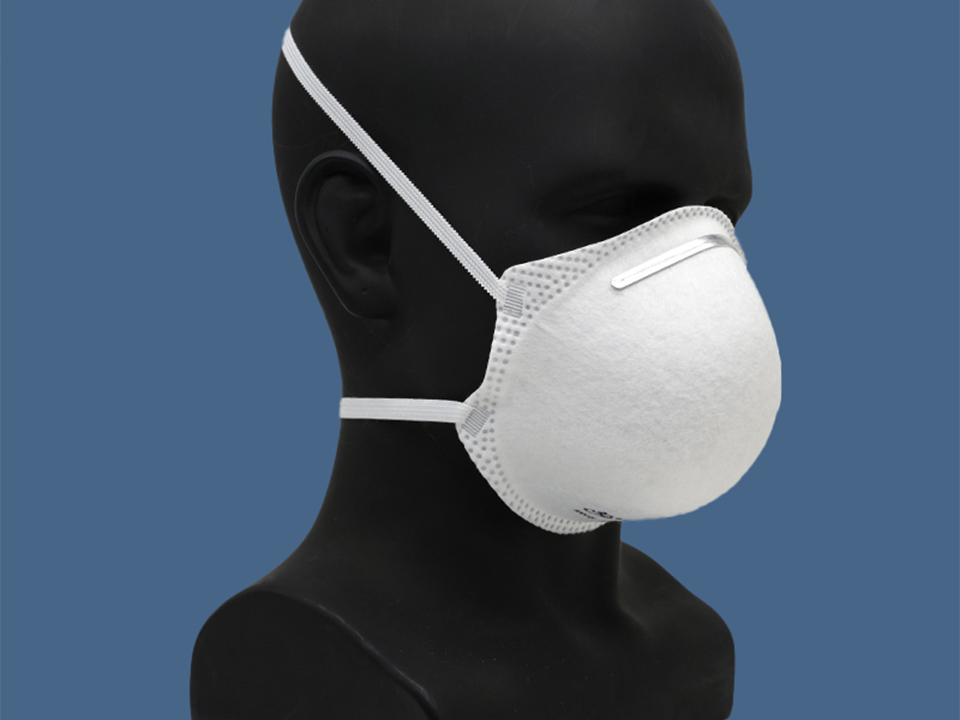
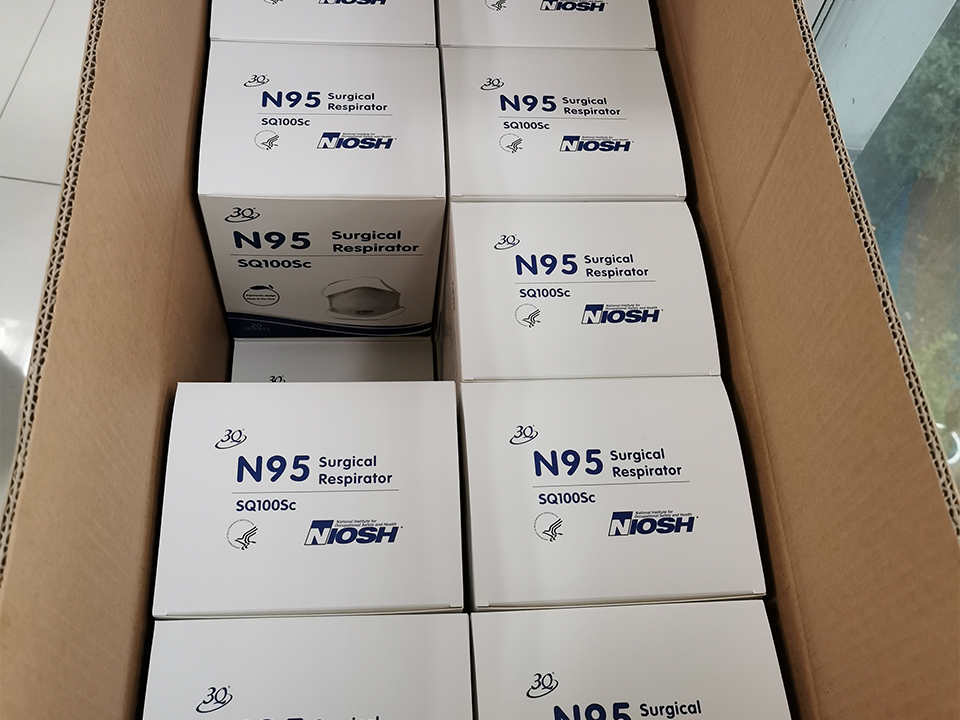
PFE also does not make a medical mask an N95. N95 is a NIOSH respirator classification tied to an approved product, manufacturer, design, filtration test, quality system, markings, and approval number. “N95-grade,” “N95-style,” and “comparable to N95” are marketing phrases unless the product appears in the relevant NIOSH approval records.
Delta P Mask Breathability Is a Performance Variable, Not a Comfort Slogan
Delta P is the pressure difference measured across a defined area of mask material while air flows through it. It is expressed in mm H₂O/cm². Lower resistance generally means air can pass through the material more easily.
The ASTM F2100-23 ceilings are:
- Level 1: less than 5.0 mm H₂O/cm²
- Levels 2 and 3: less than 6.0 mm H₂O/cm²
For conversion, 1 mm H₂O is approximately 9.80665 pascals. The ASTM ceilings therefore correspond to roughly 49.0 Pa/cm² for Level 1 and 58.8 Pa/cm² for Levels 2 and 3.
But Delta P mask breathability is not the same as total wearing comfort. Pleat geometry, available filter area, moisture accumulation, nose-wire stiffness, ear-loop tension, skin contact, room temperature, and edge leakage all influence the experience.
Low Delta P alone can also mislead. A highly permeable material with poor filtration may feel easy to breathe through because it is doing less filtration work. BFE, PFE, and Delta P must be reviewed together.
For competitive sourcing, I would set an internal Delta P target below the ASTM maximum and compare suppliers using the same method. The statutory limit should be a rejection boundary, not the engineering ambition.
Why buy at the ceiling?
A Level 3 mask recording 5.9 mm H₂O/cm² technically passes, but a comparable model recording 3.8 mm H₂O/cm² may offer more breathing headroom—provided its filtration, fluid resistance, design, and consistency are equally documented.
Three Records That Expose the Industry’s Weak Points
The 2023–2024 public record tells buyers more than a stack of glossy brochures.
In March 2023, an FDA 510(k) summary for Winner Medical’s K223232 Level 3 masks reported separate results for blue and black variants. The blue mask recorded 99.75% PFE, 99.87% BFE, and a Delta P of 4.8 mm H₂O/cm²; the black version recorded 99.03% PFE, 98.90% BFE, and 3.7 mm H₂O/cm². Both passed synthetic-blood resistance at 160 mmHg.
Same level. Different numbers.
That case demonstrates why buyers should request configuration-level data. Color, basis weight, filter media, and component changes may produce measurable differences even where each variant passes. It also used the older F2100-19 particulate framework, so its PFE figures should not be ranked directly against F2100-23 results.
Then came the Razer Zephyr case. On April 29, 2024, the U.S. Federal Trade Commission announced a proposed settlement over marketing the Zephyr as “N95-grade” even though, according to the complaint, it had never been submitted to the FDA or NIOSH for the claimed certification. The order required $1,071,254.33 tied to mask revenue and imposed a $100,000 civil penalty. The standard Zephyr had sold for $99.99, while the Starter Pack cost $149.99.
The lesson is uncomfortable: price, design, technology branding, and filtration language are not substitutes for regulatory status.
And procurement pressure increased in September 2024, when Reuters reported that the United States would raise tariffs on Chinese medical face masks and surgical gloves to 50%, double the initially proposed 25%. Supply chains had a financial reason to move rapidly.
Rapid supplier changes create documentation risk. A purchasing team facing a 50% tariff can become tempted to approve a replacement factory on photographs, a generic certificate, and a pre-shipment sample. That is precisely when technical scrutiny should increase.
How to Compare Medical Mask Performance Before Issuing a Purchase Order
Here is how to compare medical mask performance without letting the sales department control the evidence.
First, define the intended use. Routine source control, moderate splash exposure, surgery, dentistry, aerosol-generating work, and industrial respiratory hazards are not interchangeable applications.
Second, specify the exact standard edition and level. “ASTM Level 3” is incomplete if the supplier does not state whether the evidence follows F2100-19, F2100-23, or another edition accepted in the destination market.
Third, verify the test laboratory. ISO/IEC 17025 accreditation should cover the actual methods used; an accreditation logo pasted onto a report is not enough.
Fourth, reconcile the product. Match the report’s model number, dimensions, attachment style, number of layers, filter basis weight, colors, manufacturing site, and labeling to the goods being quoted.
Fifth, inspect raw performance. Do not settle for a certificate that says “pass.” Review individual BFE, PFE, Delta P, fluid-resistance, and flammability results.
Sixth, connect approval to production. Put lot traceability, change notification, incoming inspection, retention samples, and nonconformance remedies into the purchase agreement.
And separate product files.
A factory may quote masks alongside disposable nonwoven sleeve covers for bulk workwear supply, but a sleeve-cover specification does not validate mask filtration. Even where both products use polypropylene nonwovens, the performance purpose, layer structure, testing, and acceptance criteria differ.
The same separation should apply to disposable PP sleeve covers for wholesale protective use. Spunbond fabric weight and elastic construction may matter for the sleeve, while medical masks require their own BFE, PFE, Delta P, fluid-resistance, flammability, and biocompatibility dossier.
Consolidated orders can still make commercial sense. Buyers sourcing disposable nonwoven face-rest covers for wholesale supply or elastic nonwoven hair bands for spa procurement may reduce administrative and freight costs by using one supplier. But each product family needs a separate specification, risk assessment, and evidence package.
Shared material is not shared compliance.
The Best Medical Masks for Filtration and Breathability
The best medical masks for filtration and breathability are not automatically the products with the largest number printed on the box. They are masks that meet the correct exposure-based level, remain comfortably below the Delta P limit, fit the intended users reasonably well, and arrive with traceable production evidence.
For low-fluid routine care, a documented ASTM Level 1 mask may be sufficient under the buyer’s institutional protocol. Paying for Level 3 does not automatically improve every outcome.
For moderate fluid exposure, Level 2 adds 120 mmHg synthetic-blood resistance and higher BFE requirements.
For procedures with high splash or spray exposure, Level 3 provides the 160 mmHg fluid-resistance benchmark. But it still does not supply respiratory protection equivalent to a fitted N95.
For aerosol hazards, stop comparing medical mask percentages. Use the respirator required by the applicable occupational-health program, confirm its approval, and conduct fit testing where required.
More is not always better. Correct is better.
Frequently Asked Questions
What is a good medical mask BFE rating?
A good medical-mask BFE rating is at least 95% for ASTM Level 1 and at least 98% for Levels 2 and 3, measured on the finished mask using ASTM F2101 with a Staphylococcus aureus aerosol, not merely printed as an unsupported percentage on packaging.
Buyers should request the standard edition, specimen-level results, laboratory accreditation, report number, test date, and exact model relationship. A higher claimed percentage has little commercial value when those controls are missing.
What is a trustworthy medical mask PFE rating?
A trustworthy medical-mask PFE rating is at least 80% for ASTM F2100-23 Level 1 and at least 85% for Levels 2 and 3 under the newer F3502-based method; older F2100-19 reports used different methods and thresholds, so their percentages should not be ranked directly.
The report should disclose its particulate method and test conditions. “99% PFE” without a method, standard edition, sample count, or traceable model is not a complete claim.
What does Delta P mean in a medical mask?
Delta P is the pressure differential across mask material, expressed in mm H₂O/cm², that quantifies airflow resistance; lower values generally mean easier breathing, while ASTM F2100-23 requires less than 5.0 for Level 1 and less than 6.0 for Levels 2 and 3.
Delta P should be assessed with BFE and PFE. An unusually low resistance result is not automatically desirable if filtration performance, material integrity, or production consistency is weak.
How should buyers compare medical mask performance?
To compare medical mask performance, buyers should match the same standard edition, ASTM level, test method, laboratory accreditation, model, size, and production configuration, then review specimen-level BFE, PFE, Delta P, fluid-resistance, and flammability results instead of comparing marketing percentages in isolation.
The comparison should also cover traceability, change control, packaging, shelf life, biocompatibility, labeling, and the manufacturer’s quality system. A technically good sample is not proof of repeatable bulk production.
Does an ASTM Level 3 mask replace an N95 respirator?
ASTM Level 3 is a high-fluid-resistance medical mask classification, not a respirator approval; it verifies specified BFE, PFE, Delta P, 160 mmHg synthetic-blood resistance, and Class 1 flammability, but it does not establish the tight facial seal or NIOSH certification required of an N95.
Where respiratory protection is required, buyers should verify the exact NIOSH-approved model and approval number. Similar shape, high BFE, or phrases such as “N95-grade” do not establish equivalence.
Turn the Test Report Into a Purchase Decision
Do not ask a supplier whether its mask is “high quality.” Ask which standard edition applies, which laboratory tested it, which exact configuration passed, what the individual results were, and how the shipped lots connect to that evidence.
Then put the answers in the contract.
Before approving your next medical mask order, request the complete BFE, PFE, Delta P, fluid-resistance, flammability, biocompatibility, labeling, and traceability package. If the supplier sends only a logo-filled certificate and a 99% headline, keep asking.
The paperwork is the product.