

A polished PDF may show a laboratory logo, a passing classification, and enough technical language to reassure a purchasing manager, yet still fail to establish that the masks inside the arriving cartons are the masks examined by the laboratory.
So what, exactly, are you buying?
I have reviewed enough product-compliance files to recognize the recurring pattern: suppliers send their strongest document first, not necessarily their most relevant one. It may cover another model, an obsolete construction, a hand-made sample, or material supplied before the factory quietly reduced the melt-blown layer weight.
The hard truth is that EN 14683 certification is often discussed as though a central European authority issues a universal mask certificate. That is misleading. EN 14683 is a performance standard. Evidence comes from test results, technical documentation, risk management, labeling, and the manufacturer’s Declaration of Conformity—not from one decorative certificate.
An importer should therefore request an evidence chain, not an evidence file.
What EN 14683 Testing Actually Establishes
EN 14683 specifies construction, performance, and test requirements for medical face masks intended to limit transmission of infective agents between clinical personnel and patients.
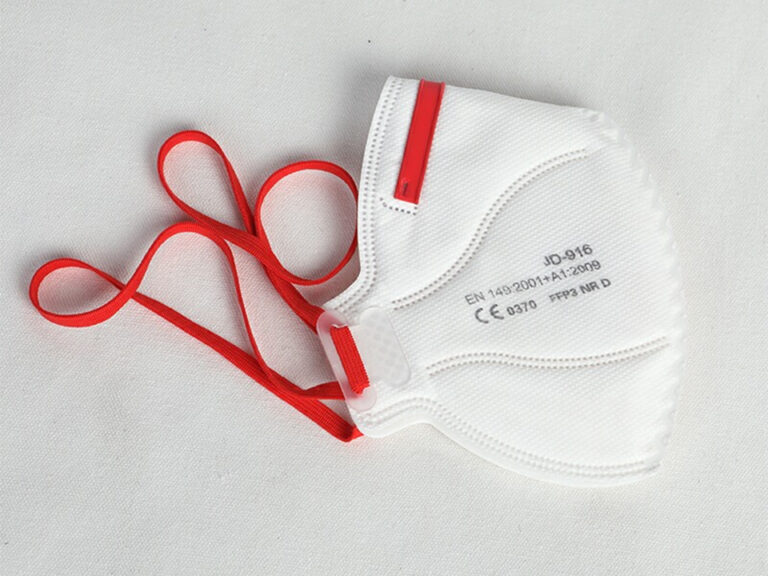
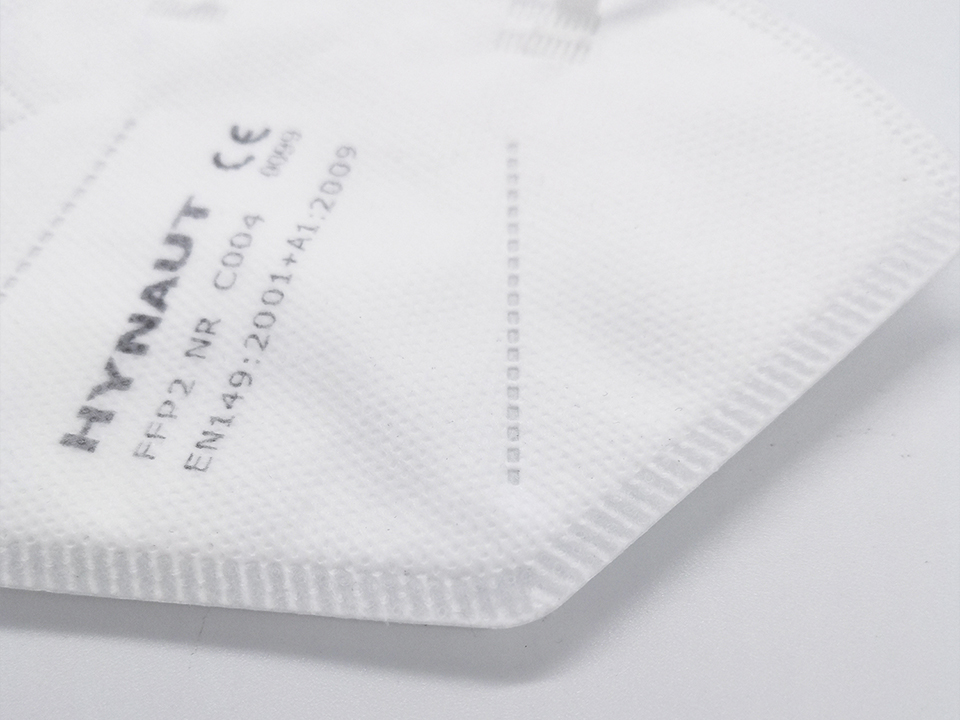
It is not the standard for filtering facepiece respirators such as FFP2 or FFP3 products. Those fall under EN 149 and the EU Personal Protective Equipment framework. A supplier who uses “FFP2 surgical mask,” “EN 149,” and “EN 14683” interchangeably may be selling a dual-purpose product—but may also be mixing unrelated documents.
For the widely used EN 14683:2019+AC:2019 edition, the headline requirements are:
| Requirement | Type I | Type II | Type IIR | What importers should verify |
|---|---|---|---|---|
| Bacterial filtration efficiency | ≥95% | ≥98% | ≥98% | Individual results, mean, sample count, challenge organism, flow rate |
| Differential pressure | <40 Pa/cm² | <40 Pa/cm² | <60 Pa/cm² | Test area, airflow, individual measurements, conditioning |
| Splash resistance | Not required | Not required | ≥16.0 kPa | ISO 22609 method, pass/fail observations, sample count |
| Microbial cleanliness | ≤30 CFU/g | ≤30 CFU/g | ≤30 CFU/g | CFU per mask, mask weight, CFU/g calculation, extraction method |
| Biocompatibility | Required assessment | Required assessment | Required assessment | ISO 10993-1 evaluation tied to actual materials and skin-contact duration |
The numbers are simple. Proving that they belong to your product is not.
EN 14683:2025 has now succeeded the 2019 edition at the standards-publication level, with national adoption and regulatory transition requiring market-specific review. Importers should write the exact standard edition into purchase specifications rather than using the vague phrase “EN 14683 compliant.”
Do not assume that publication of a newer edition automatically invalidates every existing technical file overnight. But do not accept a supplier’s old report without asking whether its regulatory assessment addresses the current edition, applicable harmonized-standard status, contractual requirements, and destination-country rules.
Demand the Full EN 14683 Test Report
A one-page certificate or “test summary” is not enough.
The complete EN 14683 test report should identify:
- The laboratory’s legal name and address
- Report number, issue date, and revision history
- Customer and manufacturer identities
- Product name, model, size, color, and construction
- Sample receipt and testing dates
- Sample quantity and conditioning conditions
- Applicable standard and exact edition
- Test methods, deviations, and subcontracted work
- Individual results—not merely “PASS”
- Photographs of the tested sample and packaging
- Authorized signatures or verifiable digital approval
- Uncertainty statements where relevant
- A statement restricting results to the samples tested
Ask for the laboratory’s ISO/IEC 17025 accreditation certificate and scope. Then inspect the scope itself. Accreditation for textile colorfastness, chemical analysis, or general microbiology does not prove competence to perform bacterial filtration efficiency testing.
That distinction matters.
A laboratory can be legitimately accredited while the specific method shown in your report remains outside its accredited scope. The report should disclose whether testing was conducted under accreditation, and any outsourced test must identify the responsible facility.
My rule is blunt: if the supplier refuses to release the full report because it is “confidential,” I treat the test claim as unverified. Sensitive prices may be redacted. Sample identity, methods, results, and report authenticity cannot.
Inspect the Bacterial Filtration Efficiency Test Data
The bacterial filtration efficiency test is the most marketable EN 14683 result and therefore the one most likely to be detached from its context.
Testing challenges the mask material with an aerosol containing Staphylococcus aureus, commonly strain ATCC 6538, and measures the percentage reduction in bacterial-carrying droplets passing through the specimen. This is not the same as particle filtration efficiency, viral filtration efficiency, or respirator fit testing.
Those claims are not interchangeable.
Importers should examine the bacterial filtration efficiency test for:
- The bacterial strain
- Aerosol challenge concentration
- Mean particle size and required distribution
- Airflow rate
- Positive-hole correction
- Upstream challenge counts
- Downstream colony counts
- Individual specimen efficiencies
- Mean BFE result
- Number of specimens tested
- Any test-method deviation
A report showing only “BFE ≥98%” conceals the difference between a comfortable margin and a result sitting directly on the limit. Five results of 99.7%, 99.8%, 99.6%, 99.7%, and 99.8% tell a different production story from 98.0%, 98.2%, 98.1%, 98.0%, and 98.1%.
Both sets may pass. Only one leaves much room for manufacturing drift.
And BFE does not validate the entire mask automatically. A Type IIR claim also depends on breathability, splash resistance, microbial cleanliness, biocompatibility, and the complete device assessment.
Match the Tested Sample to the Imported Mask
This is where many otherwise competent buyers fail.
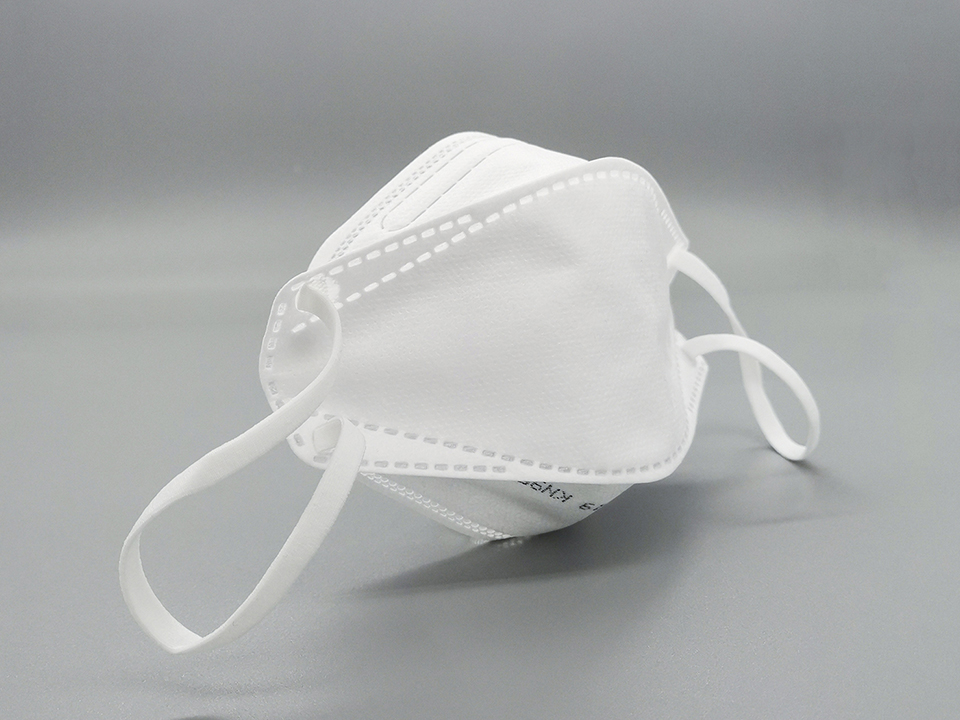
Request a signed product specification that records:
- Layer count and layer sequence
- Material type for every layer
- Basis weight in g/m²
- Melt-blown filter specification
- Mask dimensions and pleat configuration
- Ear-loop or tie material
- Nose-wire material and dimensions
- Ultrasonic-weld pattern
- Colorants and additives
- Packaging configuration
- Factory model number and importer SKU
Then compare it with the report photographs, technical file, bill of materials, packaging artwork, Declaration of Conformity, commercial invoice, and carton markings.
No common identifier? No chain.
A test report for model FM-2019 cannot safely support imported model FM-2019B merely because the supplier says they are “the same.” The manufacturer must document equivalence, including materials, dimensions, manufacturing processes, suppliers, and risk impact.
I would also require a tested-sample retention agreement. A sealed reference sample held by the laboratory, importer, or independent inspection company can become valuable when a later shipment feels thinner, breathes differently, or arrives with altered welding.
Verify Lot-Level Production, Not Just Golden Samples
Pre-market testing can demonstrate that selected samples passed. It does not prove that every production lot matches them.
The factory knows this.
Require the supplier to provide a batch release pack for each lot, including:
- Production date and lot number
- Quantity manufactured
- Raw-material lot numbers
- Incoming material inspection records
- In-process weight and dimensional checks
- Weld-strength or ear-loop attachment checks
- Finished-product inspection results
- Microbial-cleanliness monitoring
- Packaging and labeling approval
- Nonconformance and rework records
- Certificate of analysis or conformity
- Authorized batch-release signature
For large orders, I recommend independent pre-shipment sampling using a written protocol that prevents the supplier from selecting presentation samples. Laboratory retesting should use unopened retail or dispenser boxes drawn from finished cartons.
Randomness matters. Otherwise, “random sample” means whichever box the sales manager placed nearest the inspection table.
The 2023 testimony presented to a U.S. House Homeland Security subcommittee offers a wider trade-enforcement warning: when U.S. Customs and Border Protection pulled certain imported products for laboratory analysis, officials reported a 50% discrepancy rate in those samples. That figure was not specific to medical masks, so it should not be misrepresented as a mask-failure rate. It does, however, show why importers cannot treat supplier declarations as neutral evidence.
Check Breathability, Splash Resistance, and Cleanliness
BFE attracts attention. Differential pressure exposes shortcuts.
A dense filter can produce impressive filtration while making the mask uncomfortable to wear. EN 14683 therefore measures differential pressure in pascals per square centimeter. Importers should request the individual readings, tested area, airflow, conditioning, and calculation—not merely a rounded average.
For Type IIR masks, splash resistance must also be supported under ISO 22609. The report should state the test pressure, specimen count, observed penetration, conditioning, and acceptance result. If a report calls a mask “fluid resistant” but contains no splash-resistance data, the wording is marketing, not evidence.
Microbial cleanliness is another frequent weak point. The limit is expressed as colony-forming units per gram, or CFU/g. A credible report should disclose the total bioburden for each mask, individual mask weight, extraction method, recovery considerations, incubation conditions, and the calculation used to reach CFU/g.
Watch the dates. A BFE report from one year, a bioburden report from another, and a splash report for a differently named model do not automatically form one compliant dossier.
CE Marking Is Not a Substitute for Test Evidence
For the EU market, ordinary non-sterile medical face masks are generally Class I medical devices under Regulation (EU) 2017/745. The manufacturer conducts the applicable conformity assessment, prepares technical documentation, issues the EU Declaration of Conformity, and affixes the CE mark.
That has an uncomfortable implication: a four-digit notified-body number beside the CE mark is not normally expected for a non-sterile Class I medical mask.
If a supplier presents a generic “CE certificate” from a commercial certification company, ask what legal role that company performed. Voluntary certificate issuance is not the same as notified-body conformity assessment. For a sterile Class I device, notified-body involvement applies to the aspects associated with sterility.
The importer should request and cross-check:
- The signed EU Declaration of Conformity
- Manufacturer’s full legal name and address
- EU Authorized Representative details where required
- Basic UDI-DI and device identification, where applicable
- MDR classification and classification rationale
- Applicable standards and common specifications
- Risk-management documentation
- Clinical evaluation
- Post-market surveillance plan
- Labeling and instructions for use
- Economic-operator registration information
- Complaint, vigilance, and recall procedures
The European Commission’s medical-mask guidance states that compliant medical face masks must be CE marked, accompanied by the manufacturer’s declaration, and supported by appropriate technical documentation. The Declaration of Conformity is a legal statement. It is not a substitute for the evidence beneath it.
In the United States, the 2024 FDA position similarly identified surgical masks under 21 CFR 878.4040. That is a useful warning for international buyers: EN 14683 testing does not, by itself, establish U.S. market authorization or compliance with ASTM F2100, FDA labeling, registration, listing, and premarket requirements.
Destination rules win.
Run an Authenticity Check Before Paying the Balance
Report verification should occur independently of the supplier.
Use contact information obtained from the laboratory’s official records, not an email address printed only on the report. Send the complete PDF and request confirmation of:
- Report number
- Customer identity
- Sample description
- Issue date
- Revision status
- Test location
- Authenticity
- Whether results remain valid and unaltered
- Whether the method was within the accredited scope
Inspect the PDF metadata and visual details. Inconsistent fonts, shifted tables, low-resolution logos, missing pagination, overwritten product names, impossible date sequences, and signatures pasted onto blank space deserve investigation.
But visual inspection is not authentication.
In a well-known Swiss market-surveillance case, authorities warned that documents marketed as “certificates of compliance” for certain face masks were neither declarations of conformity nor test reports. The lesson remains current: official-looking paper can be commercially persuasive while having no regulatory function.
By 2024, the European Commission recorded 4,137 alerts in its general Safety Gate system. Medical devices use separate vigilance channels, so that statistic must not be presented as a medical-mask recall count. It does show the scale at which European authorities were exchanging information about unsafe non-food products—and why traceability must be designed before a problem appears.
Treat Caps, Masks, and Other Disposables as Separate Compliance Files
Importers frequently source masks alongside caps, gowns, shoe covers, and other disposable hygiene products. Commercial bundling is sensible; regulatory bundling is not.
A mask report cannot support a cap. Nor does a supplier’s success with a simple hygiene article prove medical-device compliance.
For example, buyers building procedure-room assortments may source disposable elastic-back doctor caps for bulk procurement alongside masks. The cap should have its own material specification, intended-use assessment, labeling, inspection criteria, and contractual requirements.
The same applies to PP/SMS tie-back doctor caps for hygiene supply and products offering greater hair coverage, such as PP nonwoven full-head disposable balaclava caps.
I favor one controlled procurement matrix per SKU. It should state intended use, regulatory status, relevant standards, required tests, acceptable materials, packaging, labeling, inspection level, and release authority.
That stops a supplier from attaching the strongest available report to every item in a mixed container.
Put the Evidence Requirements Into the Purchase Contract
Requests sent after production carry little leverage. Put the requirements into the purchase order before paying the deposit.
The agreement should state:
- Exact standard edition and mask classification
- Approved model and bill of materials
- No material or sub-supplier changes without written approval
- Full-report delivery and direct laboratory verification rights
- Lot-level documentation requirements
- Independent inspection and sampling rights
- Retesting procedure and laboratory-selection rules
- Pass/fail criteria
- Remedies for document fraud or product mismatch
- Rework, replacement, refund, recall, and destruction costs
- Record-retention period
- Market-surveillance cooperation obligations
- Governing law and dispute venue
Include a change-notification clause. Melt-blown media, nonwoven weight, nose wire, colorant, adhesive, ear-loop attachment, packaging, and sterilization status can affect performance or risk.
And reserve the right to test after shipment. A supplier who accepts testing only before the final balance is paid may understand the leverage problem better than the buyer does.
The Importer’s EN 14683 Evidence Checklist
Before shipment approval, I would want a clear “yes” beside every item below:
| Evidence question | Acceptable proof | Red flag |
|---|---|---|
| Is the complete report available? | Signed, paginated laboratory report | One-page certificate |
| Is the laboratory competent? | ISO/IEC 17025 scope covers relevant methods | Generic accreditation logo |
| Is the product identifiable? | Matching model, construction, photos, and SKU | “Similar mask” explanation |
| Are all required tests covered? | BFE, differential pressure, cleanliness, biocompatibility, plus splash for IIR | BFE-only dossier |
| Are individual results disclosed? | Raw specimen-level data and calculations | Pass/fail summary |
| Is the report authentic? | Direct laboratory confirmation | Supplier-controlled verification email |
| Does production match the sample? | Approved specification and lot records | Undisclosed material substitutions |
| Is CE documentation coherent? | MDR declaration and consistent economic-operator data | Generic CE certificate |
| Can the lot be traced? | Lot code links cartons, records, and invoices | Reused or missing batch code |
| Is post-market action possible? | Complaint, vigilance, and recall procedure | No EU contact or distribution records |
If even one identity field conflicts, stop release and investigate. Compliance failures rarely announce themselves with a dramatic red stamp; they appear as small inconsistencies that procurement teams decide are too inconvenient to pursue.
Frequently Asked Questions
What test evidence should medical mask importers request?
Medical mask importers should request a complete EN 14683 laboratory report, specimen-level results, ISO/IEC 17025 accreditation scope, product photographs, signed specifications, lot-release records, biocompatibility evidence, the EU Declaration of Conformity, labeling, risk documentation, and independent laboratory confirmation linking the tested sample to the exact imported model and construction.
The report package should cover BFE, differential pressure, microbial cleanliness, and, for Type IIR masks, splash resistance. Importers should also confirm that changes to materials or manufacturing occurred only through a controlled, documented process.
Is an EN 14683 certificate enough for medical mask compliance?
An EN 14683 certificate alone is not sufficient evidence of medical mask compliance because EN 14683 is a performance standard rather than a stand-alone product authorization. Compliance depends on test data, device identification, technical documentation, risk management, labeling, conformity assessment, a valid Declaration of Conformity, and applicable destination-market requirements.
A certificate can be useful as a summary. It becomes dangerous when purchasing teams mistake the summary for the complete legal and technical dossier.
How can an importer verify an EN 14683 test report?
An importer can verify an EN 14683 test report by contacting the issuing laboratory through independently obtained details, confirming the report number and sample identity, checking the laboratory’s accreditation scope, comparing the tested construction with production specifications, reviewing individual results, and tracing the report to the shipment’s exact SKU and lot.
Do not rely solely on QR codes or email addresses supplied by the factory. Both can direct the buyer to infrastructure controlled by the document provider.
What is the difference between Type II and Type IIR masks?
Type II and Type IIR medical masks both require bacterial filtration efficiency of at least 98%, but Type IIR masks must additionally resist liquid splash at a pressure of at least 16.0 kPa. Under the 2019 edition, Type IIR masks also have a different differential-pressure limit: below 60 Pa/cm² instead of below 40 Pa/cm².
The “R” means splash resistant. It does not mean respirator, reusable, or a higher particle-filtration class.
Does CE marking prove that a mask passed EN 14683 Testing?
CE marking does not independently prove that a medical mask passed EN 14683 Testing; it represents the manufacturer’s declaration that the device complies with applicable EU requirements. Importers must still examine the underlying test evidence, technical documentation, device classification, Declaration of Conformity, economic-operator details, labeling, and post-market responsibilities.
For ordinary non-sterile Class I masks, a mysterious commercial “CE certificate” may carry far less legal weight than the supplier implies.
How often should imported medical masks be retested?
Medical masks should be retested according to a documented, risk-based plan covering supplier performance, production volume, material changes, complaints, failed inspections, aging, and regulatory updates. Retesting should also occur whenever a filter layer, material supplier, basis weight, construction, manufacturing site, process, packaging configuration, or claimed classification changes.
Annual testing may be a sensible contractual baseline for stable production, but it is not a universal rule. High-risk or inconsistent factories justify more frequent lot surveillance.
Buy the Evidence Before You Buy the Masks
The safest importer is not the one holding the largest folder. It is the one who can connect every claim to an identifiable test, every test to an approved construction, and every construction to a traceable production lot.
Request the full EN 14683 test report before placing the order. Authenticate it before paying the balance. Then verify that the shipment still matches it.
If a supplier cannot provide that chain, do not negotiate around the missing evidence. Source a product whose compliance can survive laboratory scrutiny, customs review, market surveillance, and—most importantly—a real clinical complaint.