

Disposable Eye Shield Face Mask with Ear Loops
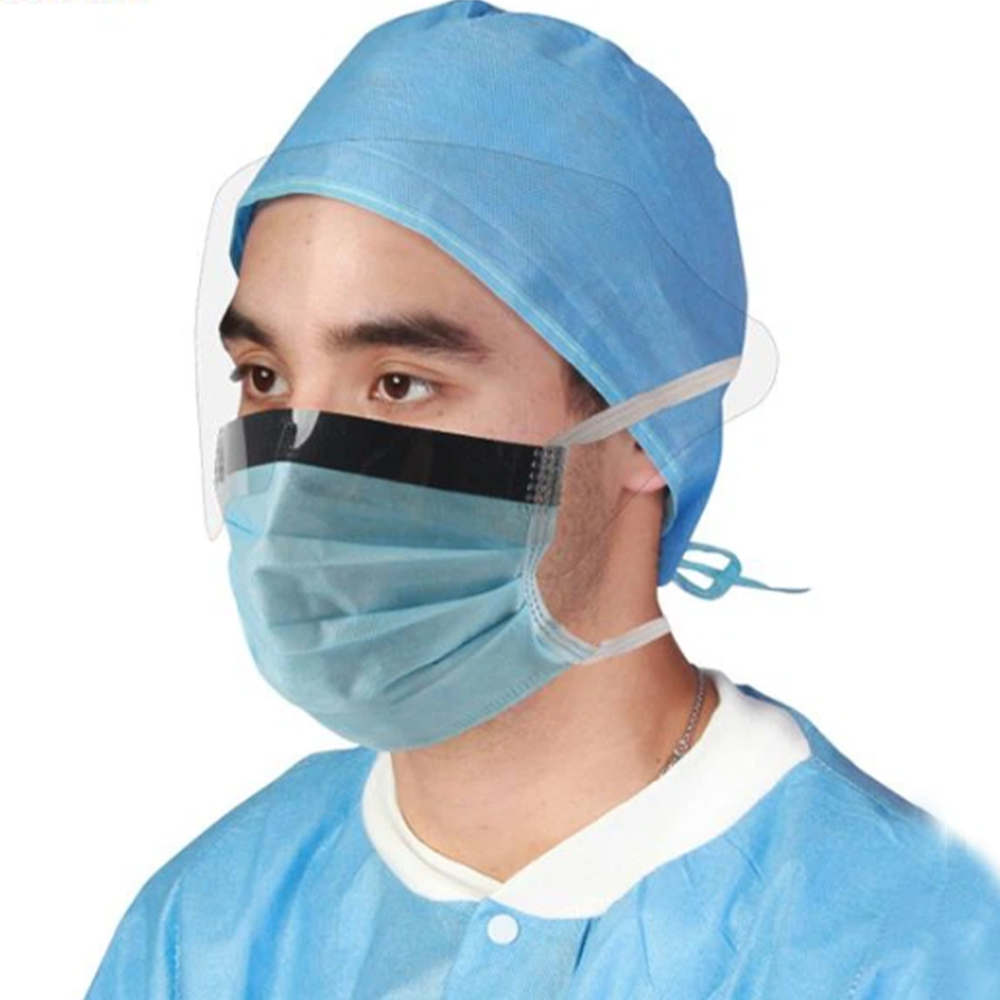
This single-use procedure-style face covering combines nose and mouth coverage with an attached transparent eye-protection component. It is designed for professional environments where splash or spray exposure may be a concern, bringing two facial PPE functions into one convenient format. Ear loop wearing supports quick application without ties.

What Is This Ear Loop Face Mask with Integrated Eye Protection?
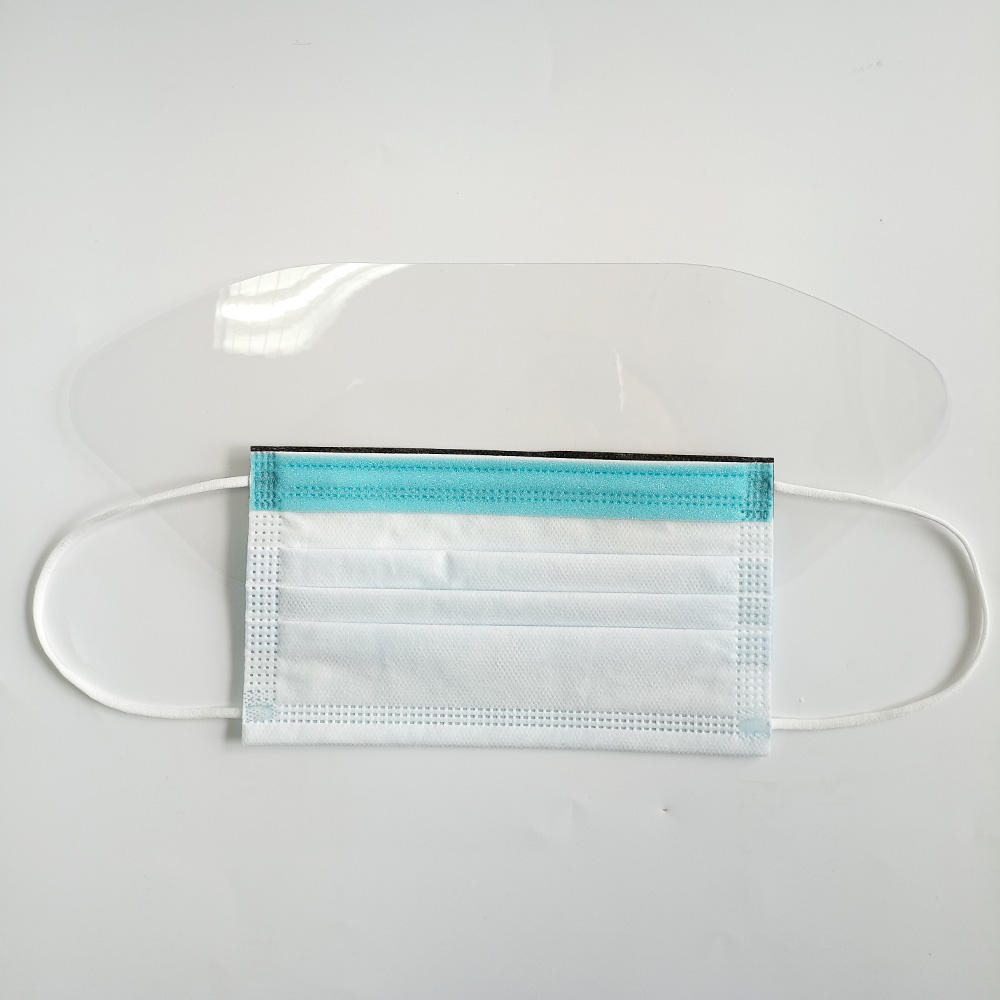
The product combines a pleated lower-face section with a clear transparent barrier positioned above it. The lower section covers the nose and mouth, while the transparent component extends coverage to the eye area.
For buyers comparing disposable face masks, the practical value is integration: one item can reduce the need to manage separate facial PPE components when this configuration matches the exposure assessment. This disposable mask should not be confused with a reusable face mask or assumed to meet a specific medical classification without documentation.
Key Features and Construction
- Typical models may include:
- A pleat design that expands over the lower face.
- A full-width or adjustable nosepiece to improve positioning and help the upper edge sit snugly.
- Elastic earloops rather than head ties.
- Multi-layer non-woven construction; applicable models may use polypropylene.
- A clear plastic eye shield or visor designed to preserve the viewing area.
- Breathable materials and an anti-fog shield on applicable models only.

How Does Attached Eye Protection Help?
An attached eye shield adds a transparent barrier in front of the eye area to help limit direct exposure to splashes, sprays, droplets, and similar contaminants. Eye and face PPE should be selected for the actual workplace hazard, and different designs provide different degrees of coverage.
Check shield height, width, clarity, side coverage, and whether the design is wraparound. Confirm anti-glare, optically clear, and fog-performance claims instead of assuming them from the product name. Wearers who use eyeglass frames should also assess clearance and comfort. Where broader coverage is required, evaluate whether separate goggles or a face shield better matches the hazard.
Where Is an Ear Loop Mask Commonly Used?
An ear loop mask with an integrated transparent barrier may be considered for healthcare, dental care, laboratory tasks, patient care, first aid, cleanup, isolation workflows, and other professional settings where facial splash protection is appropriate.
For emergency care, caring for someone who’s injured or cleaning up bodily fluids can create splash concerns. Tasks involving bodily fluids and bio-hazardous materials require hazard-specific PPE selection; do not treat this product as suitable for every procedure, chemical exposure, or operating-room task.

What Are the Benefits of Elastic Ear Loops?
Elastic ear loops allow quick donning and removal without tying straps behind the head. A mask with elastic ear loop fastening can simplify routine handling in clinics, dental rooms, labs, and supply programs where PPE changes may be frequent.
Fit still depends on product dimensions, wearer anatomy, and upper-edge design. Do not assume a one size fits children and adults claim. If sizing matters, request dimensions and sample units before a volume order.
Filtration, Fluid Resistance and Performance Specifications
Performance depends on the tested data for the exact model. ASTM F2100 addresses medical face-mask material performance using measures that include bacterial filtration efficiency, differential pressure, sub-micron particulate performance, resistance to synthetic-blood penetration, and flammability.
Before purchasing, verify BFE, particulate test data, fluid resistant performance, the applicable classification, and EN 14683 status where relevant. Check whether the selected model is classified as a level 3 mask; do not infer that level from appearance or naming. The same principle applies to FDA status or other regulatory claims.


Is a Face Mask with Eye Shield the Same as an N95 Respirator?
No. This procedure-style product should not automatically be treated as an N95 respirator. NIOSH describes masks as generally loose-fitting, while tight-fitting respirators are designed to form a seal to the face; NIOSH-approved respirators carry approval identification that can be verified.
Select respiratory protection according to the actual hazard, product certification, workplace requirements, and applicable regulations. Do not treat the words procedure, medical, or virus as evidence of respirator-level protection or infection prevention.